
Cleveland Garage Door Guide
Knowing When Repair Stops Making Sense in Cleveland
A look at when a garage door repair in Cleveland stops making sense, tied to the area's 1960s-70s housing stock, cold winters, and what keeps failing on old hardware.
- Licensed & Insured
- Same-Area Service Calls
- Upfront Pricing
Where People Go Wrong
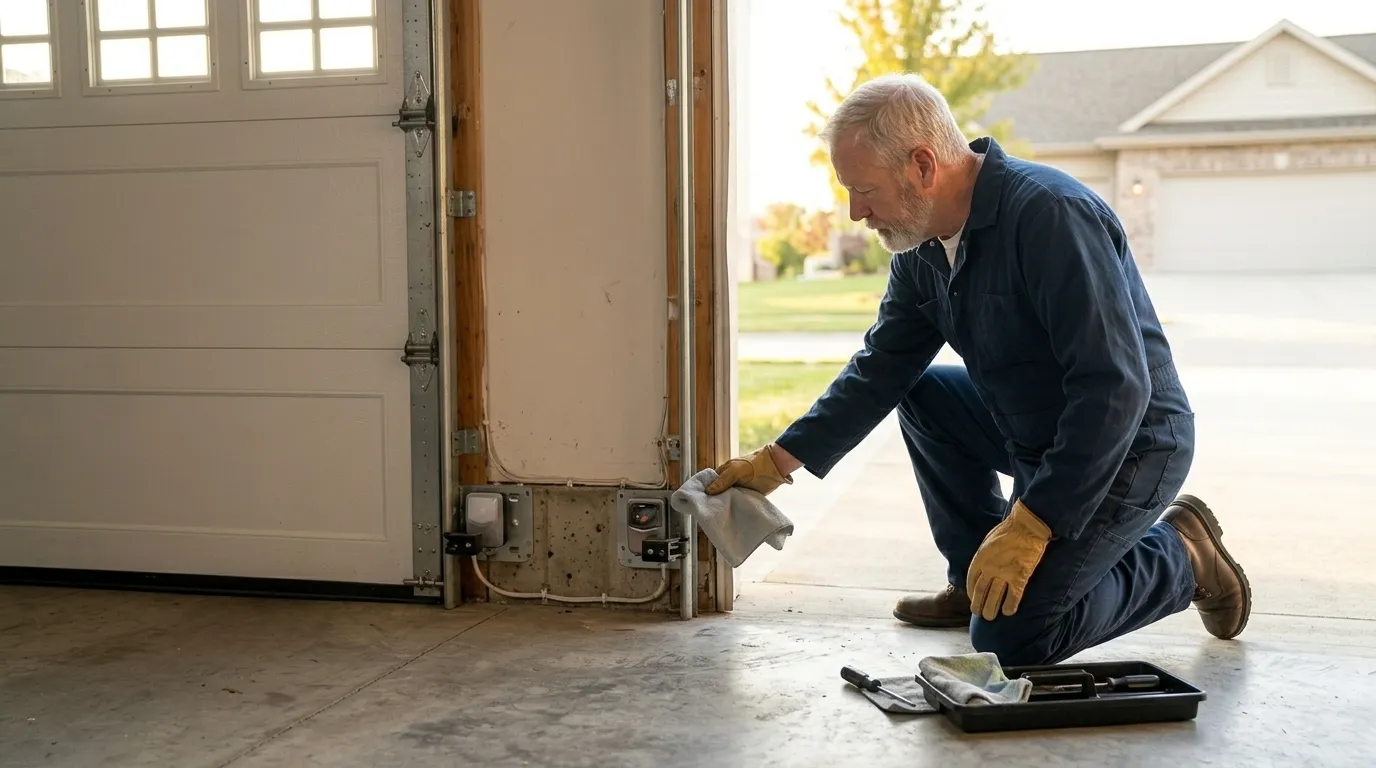
Most of the calls we get start the same way: a spring breaks or a cable frays, the door still limps up and down, and the owner figures it can wait. Across this service area, housing runs from 1938 to 2004, with the median build year sitting at 1965. That means a lot of doors out there are still running on hardware sized for panels lighter than what's sold today, or they've been patched so many times the drum, cable, and track are three different eras of parts fighting each other.
Bolting a modern spring kit onto a 1965-era header bracket works for a while, then it doesn't - the bracket was never rated for the tension you just put on it. The mistake isn't calling for one repair. It's calling for the fourth repair on the same door and expecting the fifth one to hold.
By that point you're not fixing a garage door, you're maintaining a museum piece, and every part you add is a new point where the old and new hardware don't quite agree with each other.
The Situation
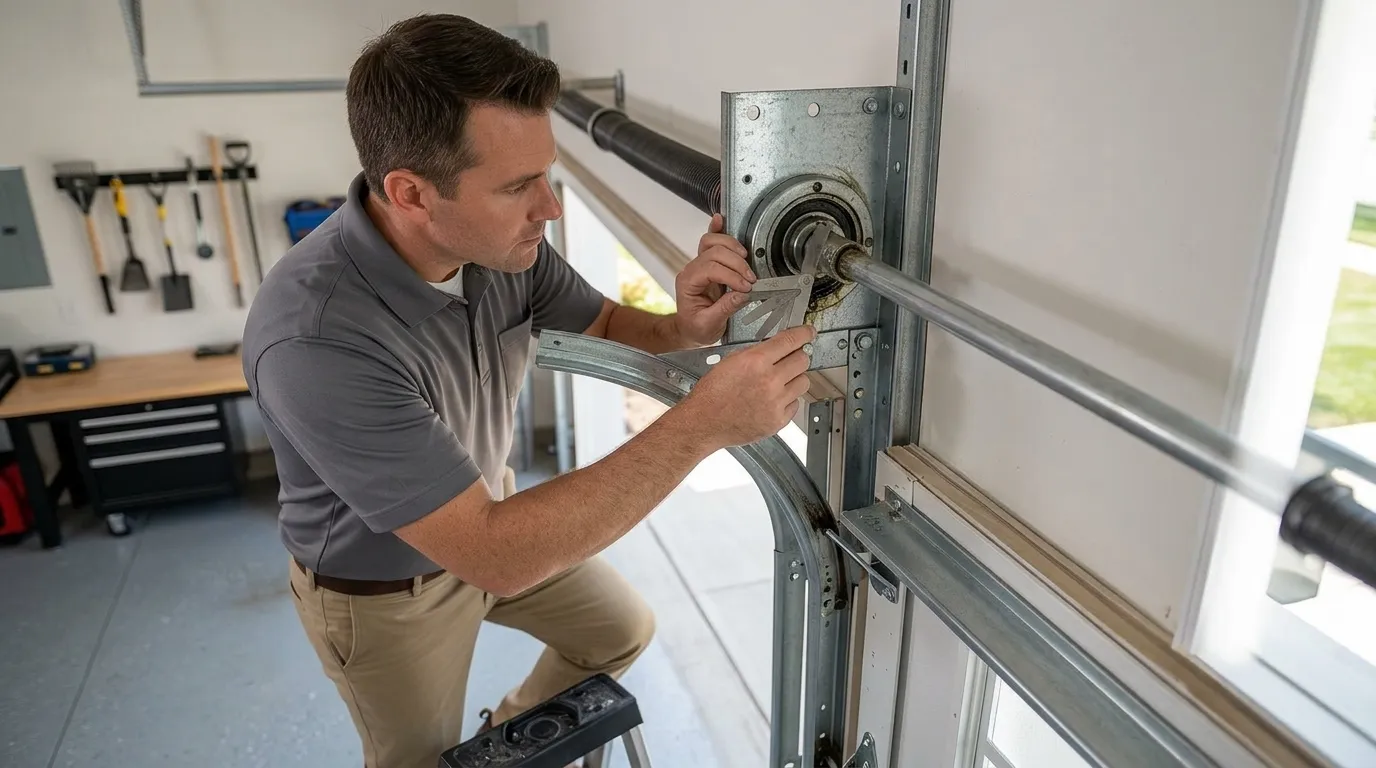
The service area covers 66 named neighborhoods and suburbs, and the pattern holds across nearly all of them: mostly 1960s and 70s stock, with pockets that go back to the late 1930s. A door installed when a house went up in, say, 1968 has outlived its expected spring cycle count several times over. The track is often the original 1-inch residential rail, not the 2-inch rail that's standard now, and if the opener's been swapped at all, it was bolted onto hardware that was never engineered for it.
When we open one of these doors up, the question usually isn't whether something's worn - it's how many things are worn at the same time. A single torsion spring failure is a straightforward fix. A torsion spring, a bent section of original track, and a rusted-through bottom bracket on the same door, all at once, is a different conversation.
At that point we're not talking about restoring the door to how it worked - we're talking about whether the door is worth restoring at all.
Doing Nothing For Now
With median household income here at $93,931 and roughly 202,321 owner-occupied houses across the service area, most owners can absorb a single repair bill without a second thought. What's harder to absorb is a door that fails while it's half-open, or a spring that lets go with a car underneath it. Waiting on a door that's already shown you two or three separate failures isn't free - it just moves the cost from a planned repair to an unplanned one, usually at a worse time.
That said, we won't tell you to replace a door just because it's old. Plenty of these 1960s and 70s doors are still structurally sound and just need the moving parts brought current. The honest limitation here: if your door uses a discontinued panel profile from that era, we can often keep the hardware running, but matching the panel itself isn't always possible, and that's the point where doing nothing stops being a neutral choice.
What the Weather Here Does to It
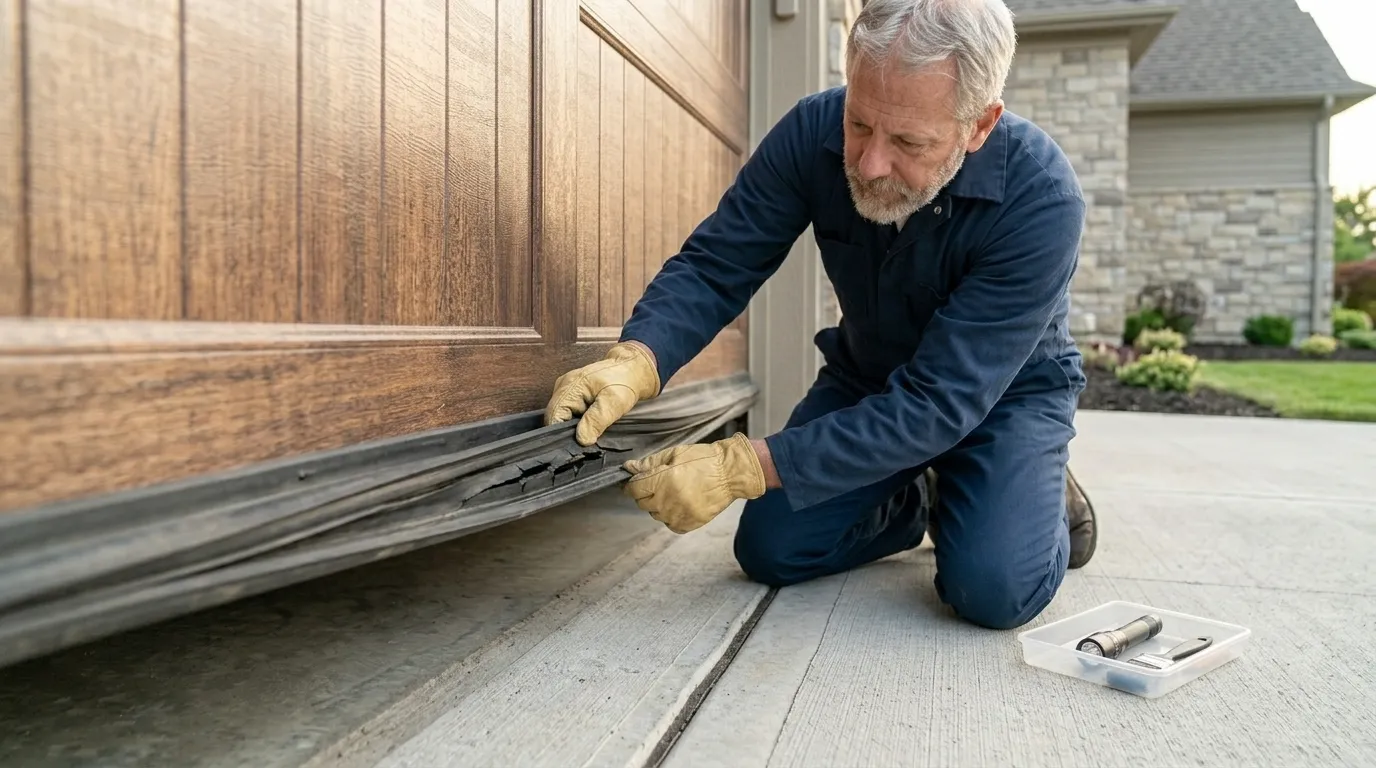
This area sits in a cold-moderate climate band, where steel doors go through real freeze-thaw cycles every winter, not just an occasional cold snap. That cycle is hard on original hardware from the 1960s and 70s in a specific way: metal contracts in the cold, torsion springs lose a measurable amount of tension, and weatherstripping that's already decades old stiffens and cracks rather than flexing. Ice at the bottom of the track adds resistance right when the opener has the least torque to spare, which is exactly when an aging spring gives out.
None of this is dramatic - it's slow, and it's cumulative, which is why a door that worked fine last March can fail in January without warning. A door built for this climate in 1965 was engineered to a different standard than one built today, and forty-plus winters of that cycle is doing more to the hardware than daily use ever would.
How We Can Help
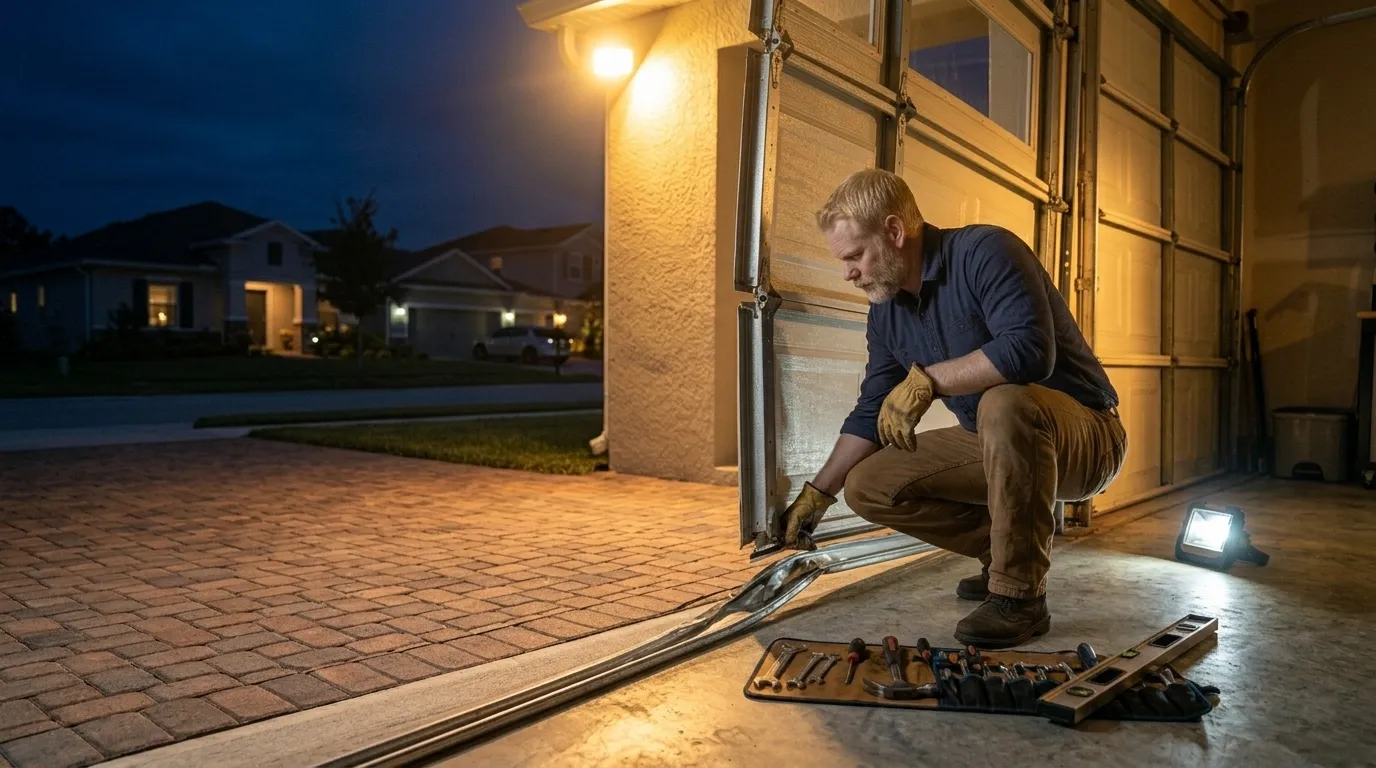
Garage Door Repair
Springs, cables, tracks, rollers, and openers fixed by a tech who explains the problem before touching anything.
Learn more →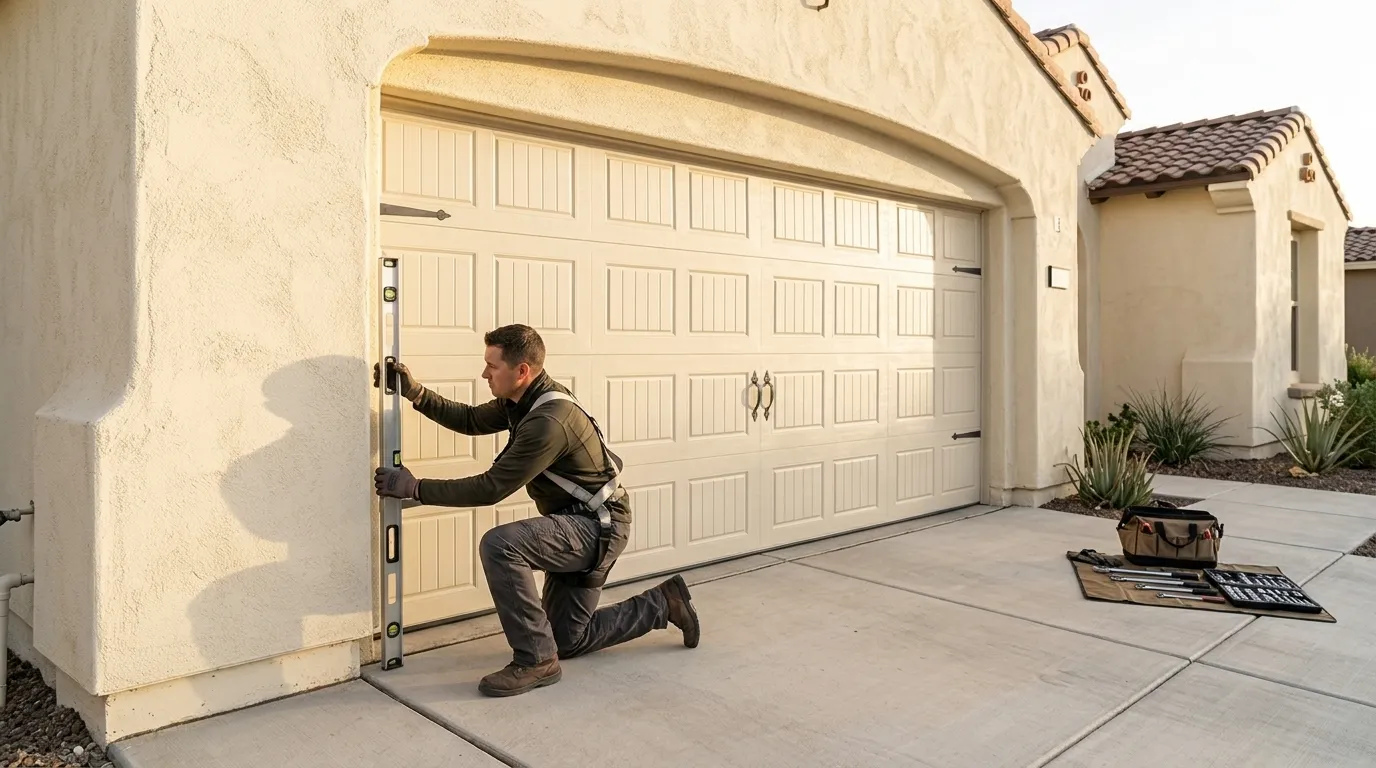
Garage Door Installation
New sectional doors sized and installed for the housing stock actually built in this area.
Learn more →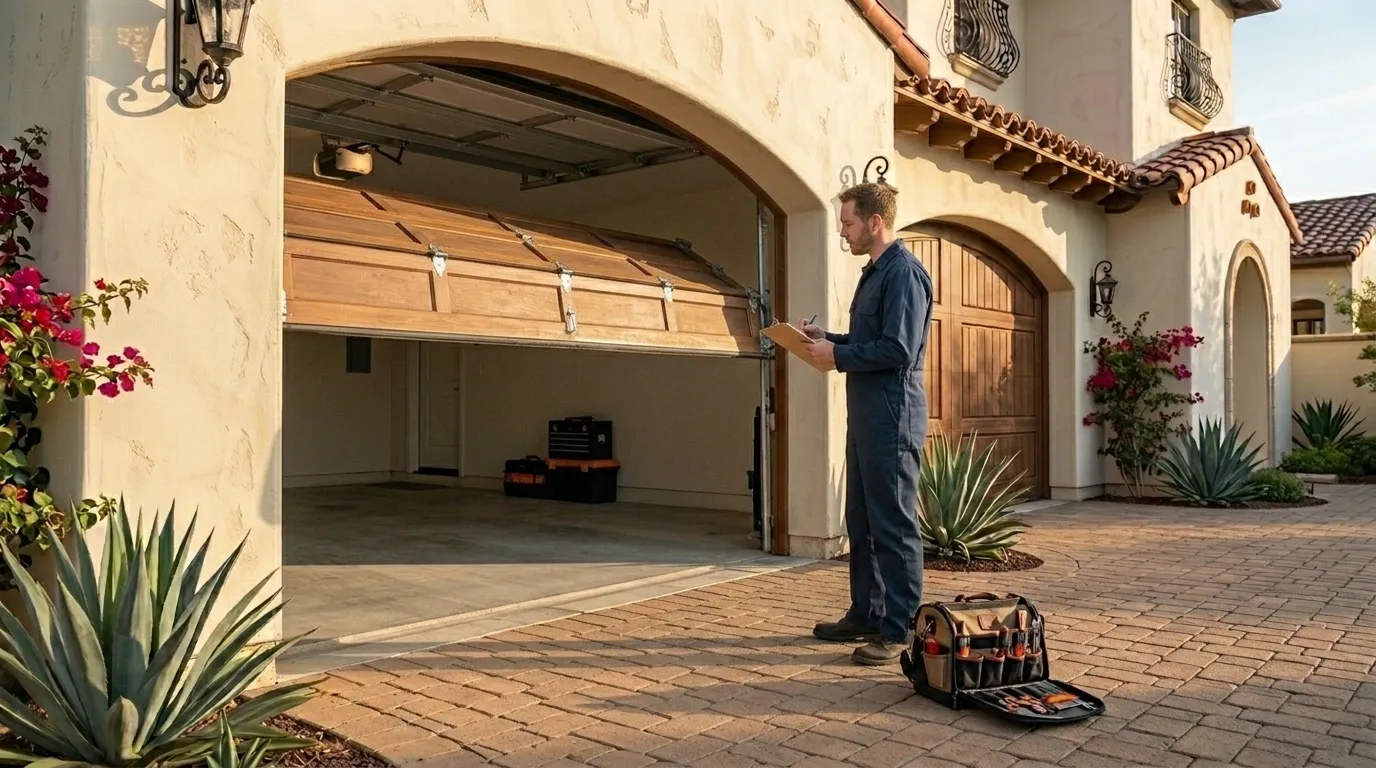
Garage Door Service
Tune-ups, lubrication, and safety checks that catch a small problem before it becomes a service call.
Learn more →Frequently Asked Questions
My garage door is original to a house built in the 1960s - is it worth repairing?
Depends what's failing. If it's one part - a spring, a cable, a roller - repair almost always makes sense. If you're seeing multiple failures on the same door within a year or two, the original hardware is likely reaching the end of its service life together, and repair starts costing more than it should.
Why did my spring break in the middle of winter with no warning?
Cold contracts steel and reduces spring tension, and this area goes through real freeze-thaw cycles each winter. A spring already worn from decades of cycles has less margin left, so the cold tips it over the edge rather than causing the wear itself.
Can you match panels on an old door if one gets damaged?
Sometimes, but not always. Some panel profiles from 1960s and 70s doors are discontinued, and we're upfront when that's the case rather than promising a match we can't deliver. That's usually the point where replacing the section, or the door, makes more sense than chasing a repair.
Have a Door That Needs a Second Opinion?
Call and describe what it is doing - we will tell you what it likely is.