
Cleveland Garage Door Guide
What a Cold Snap Does to a Cleveland Garage Door Spring
Cleveland houses built 1938-2004 rely on aging torsion springs. Here's what our cold winters do to them and why waiting makes the repair worse, not better.
- Licensed & Insured
- Same-Area Service Calls
- Upfront Pricing
Where People Go Wrong
Most owners here treat a broken spring like a battery that just died - annoying, but no big deal until you get around to it. That works in Phoenix. It doesn't work when the door in question is on a house built sometime between 1938 and 2004, with a median build year around 1965, because a lot of that original hardware is still doing its job with no maintenance history at all.
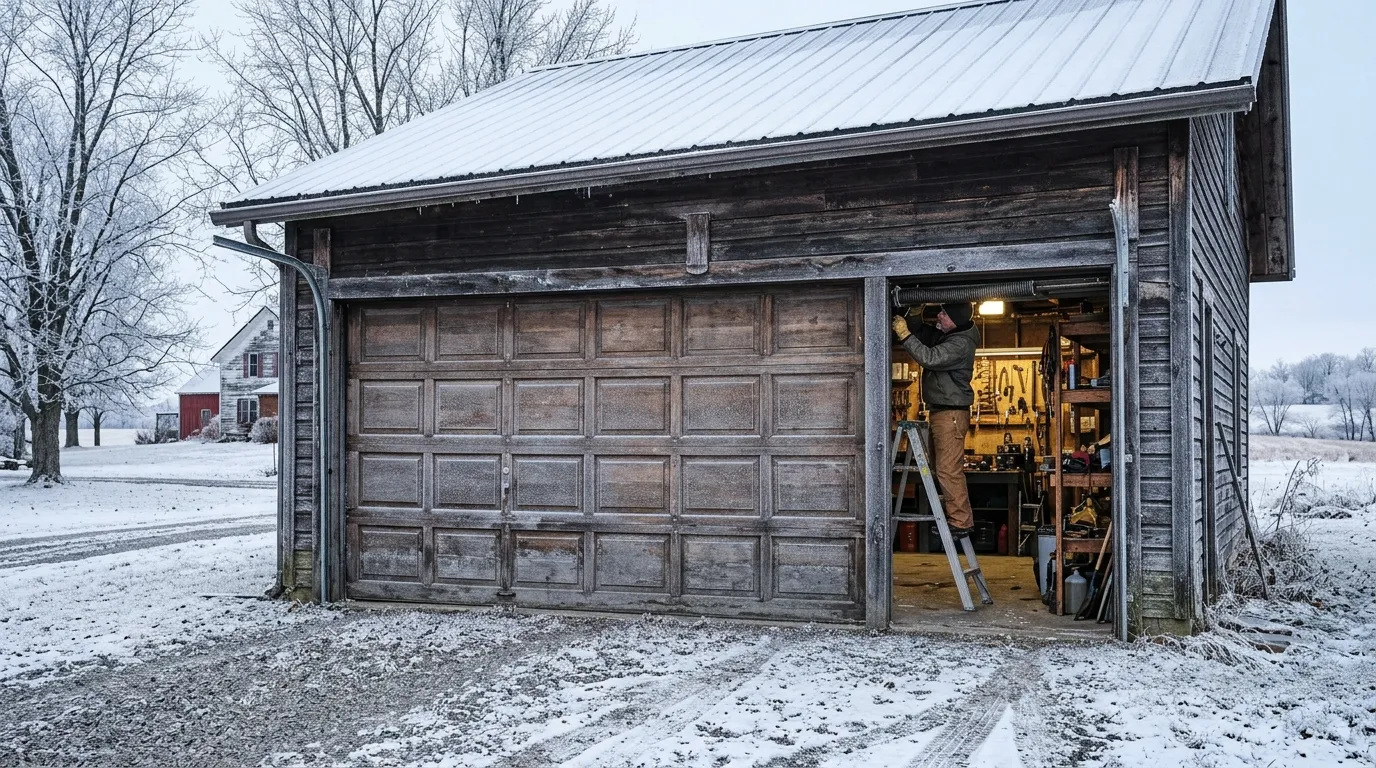
The mistake we see most is people trying to force the door open manually once the spring lets go, especially on a double-wide door. Without the spring carrying the weight, that door is 130-160 pounds of dead load on cables and a track that are probably original to a 1960s build. You can bend a track in about ten seconds trying to muscle a door up by hand, and then you've turned a spring job into a spring-and-track job.
The other error is calling a handyman instead of someone who works on torsion systems daily. Springs under tension are not a DIY item and not really a general-contractor item either. It's a narrow skill, and Cleveland's older housing stock means the hardware you're dealing with often predates the parts sitting on a typical truck.
The Situation
Cleveland sits in a cold, moderate climate band, which matters more for garage doors than people expect. Steel torsion springs lose flexibility as temperature drops. The metal doesn't snap because it's old - it snaps because repeated cold-to-warm cycling fatigues it faster than it would in a mild climate, and a lot of the springs on doors from the 1960s-70s stock that makes up most of this area were never sized for that many decades of cycling in the first place.
What that means in practice: the door that opened fine in October gets noticeably heavier and noisier through a hard freeze, and then one morning the spring just goes - usually on the coldest days, because that's when the metal is least forgiving. If your house is one of the many in this area with two-car garages under an attached structure, a snapped spring on a double door is a bigger, heavier failure than the single-door version, and it should be treated that way rather than left for the weekend.
Doing Nothing For Now
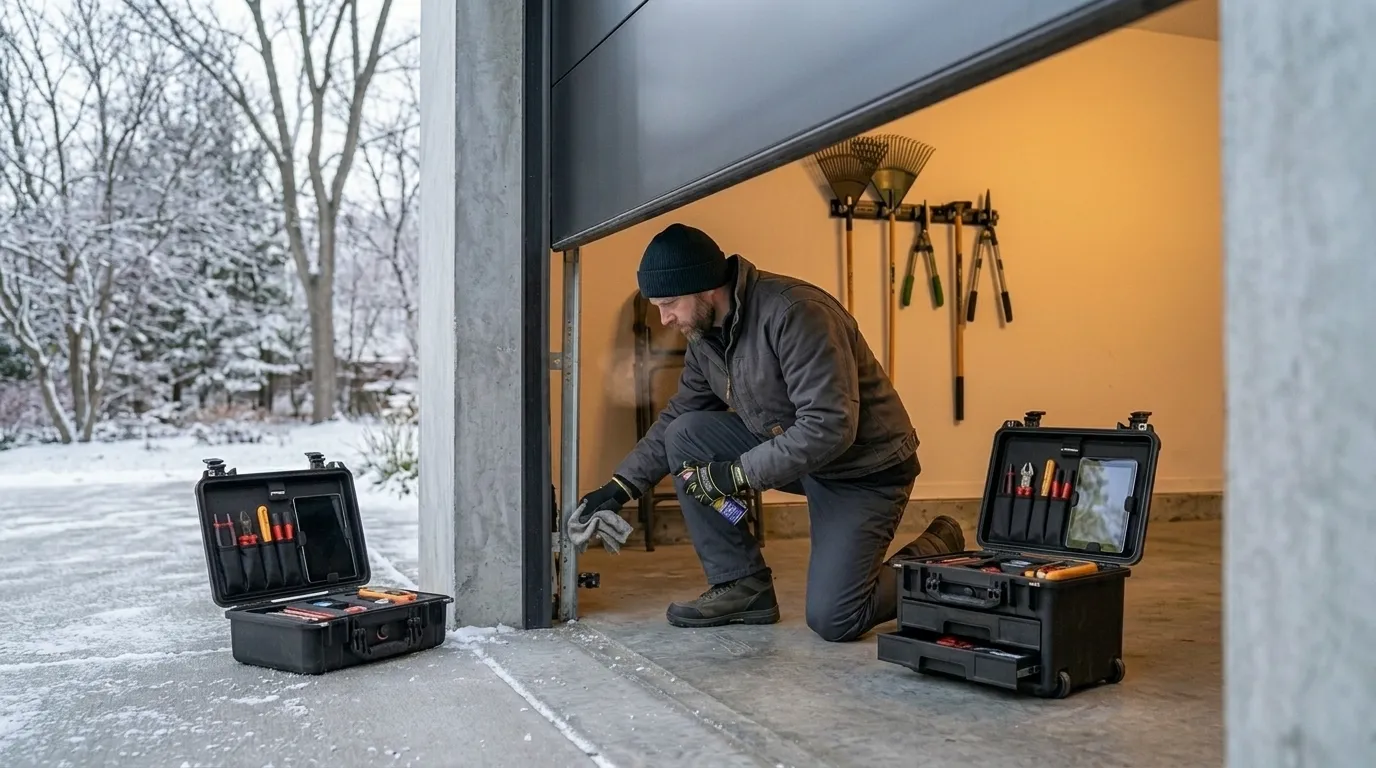
If the spring already broke and the door is down, leaving it down for a day or two while you wait for parts isn't dangerous by itself - the door isn't going anywhere. The real risk is what people do around that: propping it partway open, running the opener without the spring assisting it, or letting kids and cars treat it as usable.
Here's the honest limitation: we don't stock every spring size on the truck for every house in this area. A lot of the pre-1980 stock uses shaft and drum combinations that aren't the modern standard part, and matching that sometimes means a short wait rather than a same-visit fix.
If your opener is also original to the house, running it repeatedly against a broken spring to "test" it can burn out the motor, which turns a spring call into an opener replacement too. Leave the door down, keep the opener off, and don't put anything you can't afford to lose under it.
What the Weather Here Does to It
Cold is the main actor, but it's not acting alone. Cleveland's moderate-cold climate band means the freeze-thaw cycle repeats often through the winter rather than settling into one long deep freeze - and that back-and-forth is what actually fatigues steel springs and stiffens door seals faster than a steady cold would. Each cycle flexes metal that's already lost some elasticity from age.
On the housing side, doors built during the 1960s-70s boom that defines most of this area were speced for the standards of that era, not for fifty-plus years of seasonal cycling. Combine an original 1965-vintage spring with a hard cold snap and you get exactly the failure pattern we see every winter: a clean snap, usually on one of the colder mornings, on a door that gave no warning the day before.
How We Can Help
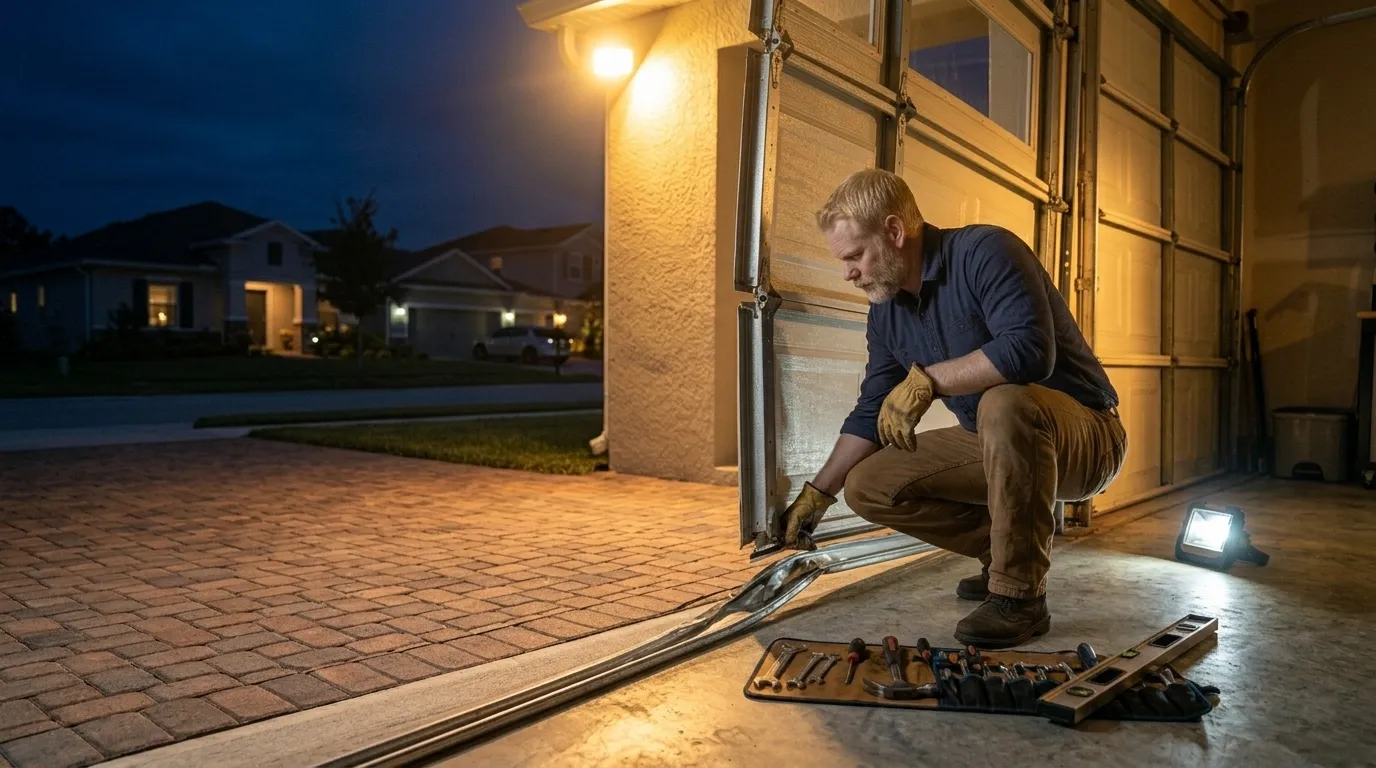
Garage Door Repair
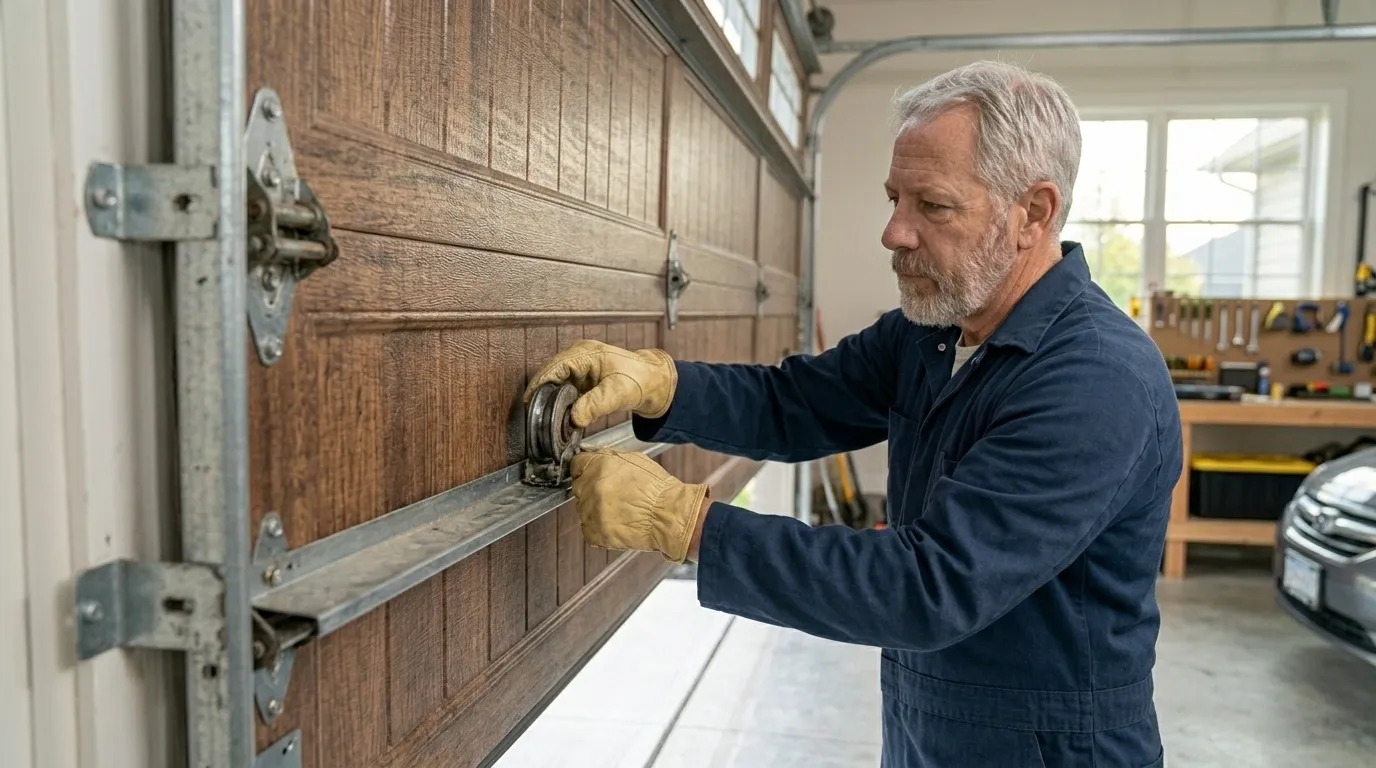
Springs, cables, tracks, rollers, and openers fixed by a tech who explains the problem before touching anything.
Learn more →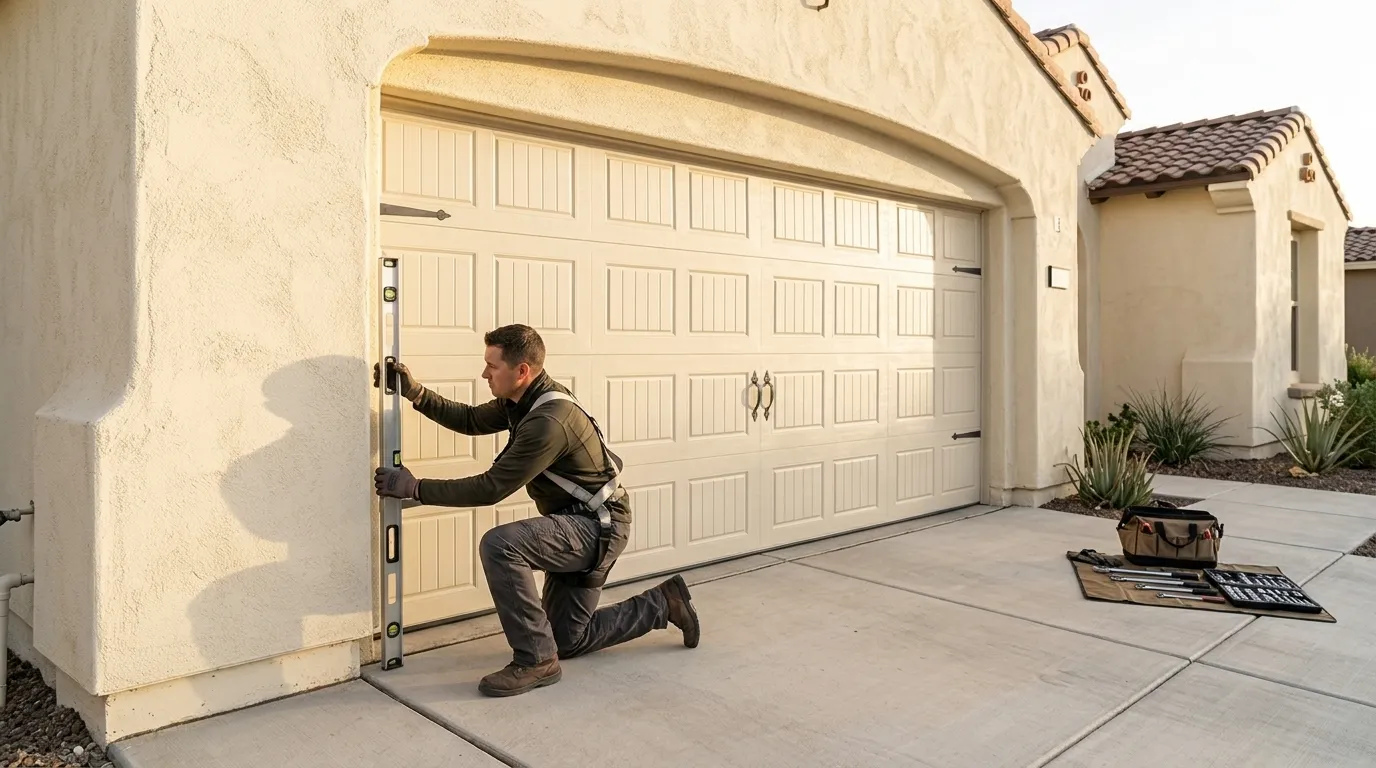
Garage Door Installation
New sectional doors sized and installed for the housing stock actually built in this area.
Learn more →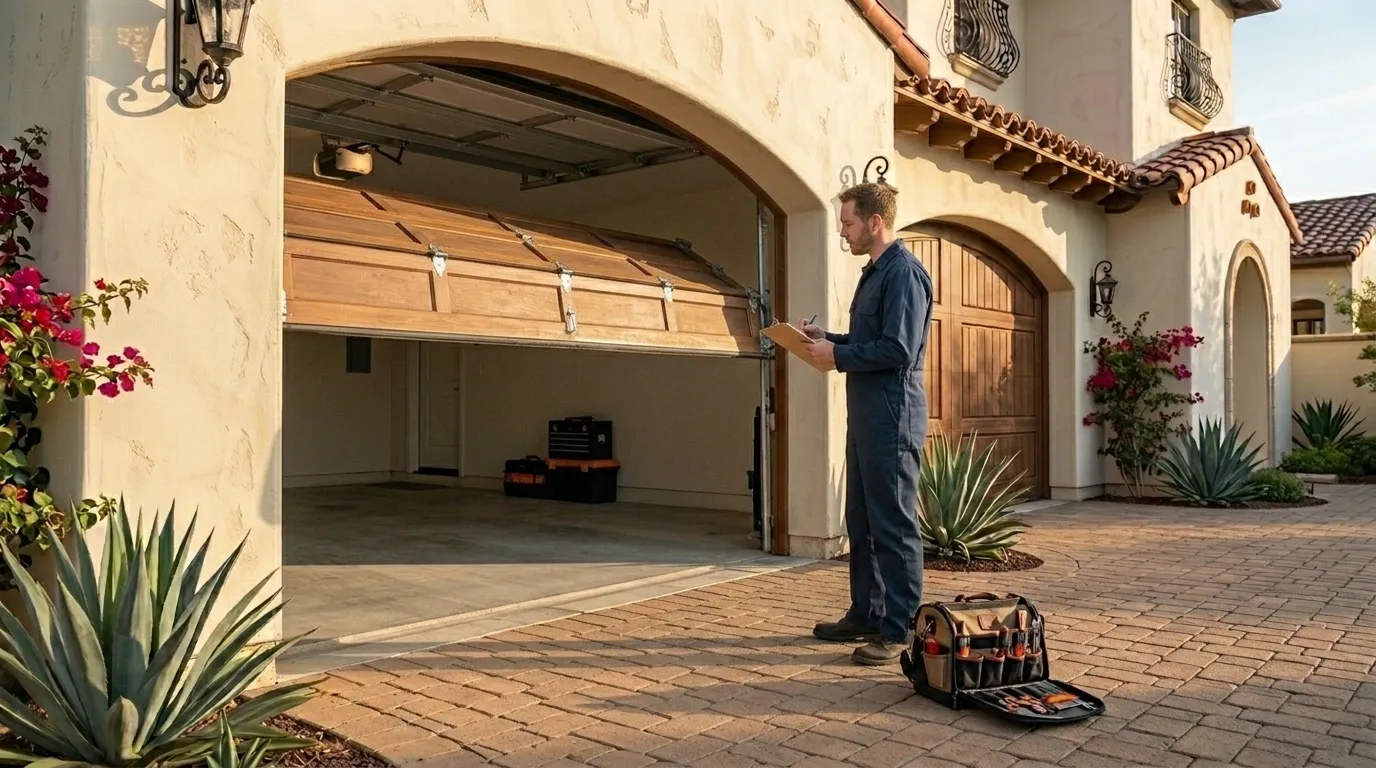
Garage Door Service
Tune-ups, lubrication, and safety checks that catch a small problem before it becomes a service call.
Learn more →Frequently Asked Questions
Why did my spring break on the coldest day of the year?
Cold steel is more brittle and less forgiving under tension, so a spring that's already fatigued from age and years of cycling is most likely to fail exactly when the temperature drops hardest. It's not a coincidence - Cleveland's repeated freeze-thaw pattern is part of what wears these springs down in the first place.
Is it safe to open my garage door by hand after the spring breaks?
You can, but the door will be very heavy - the spring is what offsets most of that weight normally. On an original 1960s-70s track, forcing it up by hand risks bending the track or pulling a cable loose, turning one repair into two. Better to leave it down until it's fixed.
My house is from the 1960s - is that why parts are harder to find?
Sometimes, yes. A good share of the housing in this area was built with shaft and drum hardware from that era that doesn't always match current standard parts, so a repair on an older house can occasionally mean a short parts wait rather than a same-visit fix.
Have a Door That Needs a Second Opinion?
Call and describe what it is doing - we will tell you what it likely is.