
Cleveland Garage Door Guide
Why Cleveland Garage Doors Let the Cold In
Cleveland's garage doors mostly date to the 1960s, and the cold winters here turn old rubber seals brittle fast. Here's what actually causes the draught and when sealing isn't enough.
- Licensed & Insured
- Same-Area Service Calls
- Upfront Pricing
Where People Go Wrong
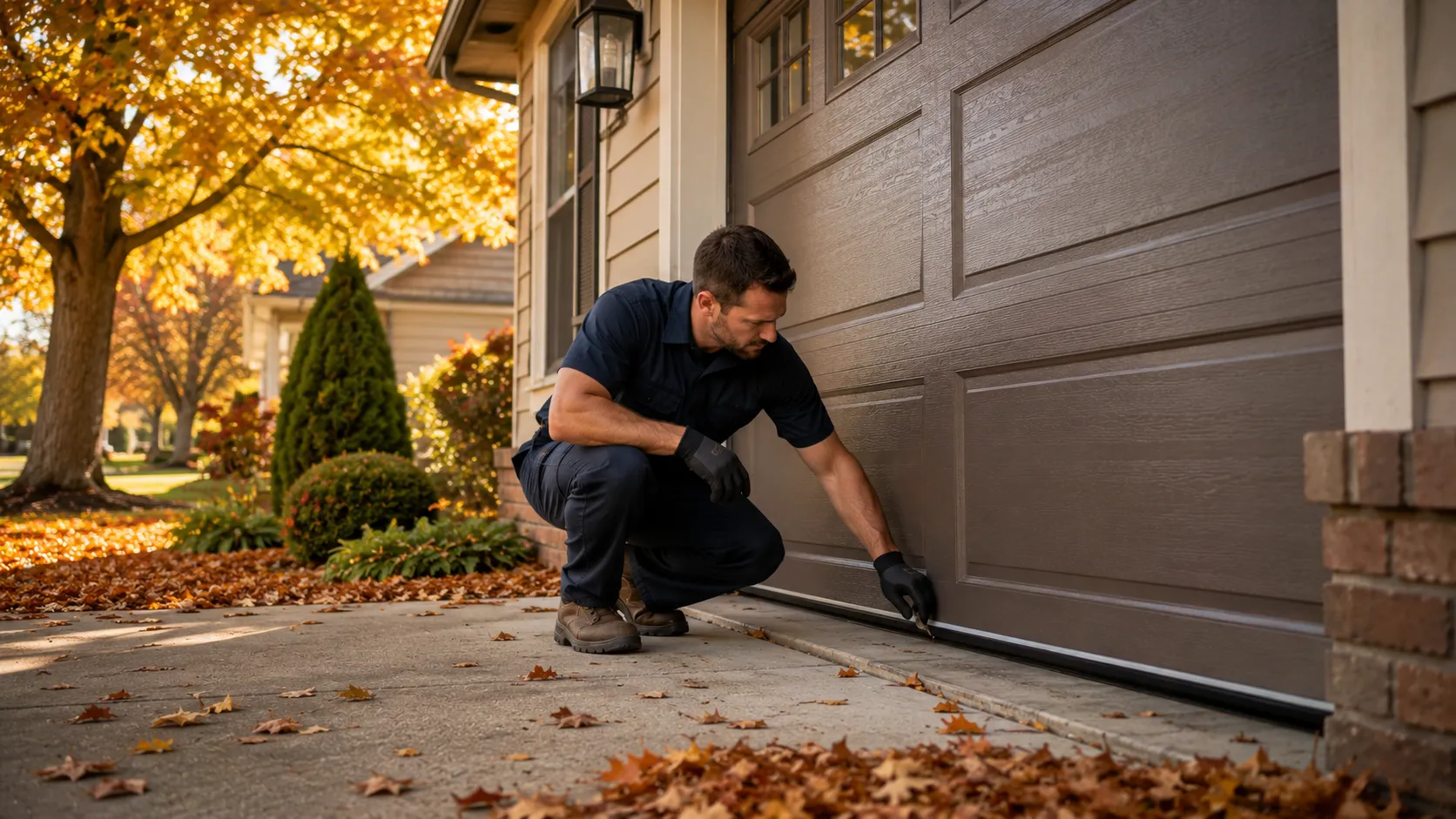
Most homeowners grab a roll of foam tape from the hardware store and staple it along the door frame, figuring that solves the draught. It doesn't, and here's why it doesn't in this city specifically: a lot of the garage stock around Cleveland sits on houses built between 1938 and 2004, with the median landing around 1965. A door and jamb built in that era wasn't sized to the vinyl bottom seals sold today, and the wood jamb itself has usually shifted after sixty-odd years of freeze and thaw.
Tape sticks to a flat, square opening. It doesn't stick to a jamb that's bowed an inch out of true, and it definitely doesn't stop air moving through a gap where the door panel no longer meets the track evenly.
The other mistake is treating the bottom seal as the whole problem. On the older single-car doors common in neighborhoods like Old Brooklyn and Brooklyn Centre, the side seals (the vertical strips along the jamb) dry out and shrink faster than the bottom astragal, because they take direct sun and wind differently. Replace one and ignore the others, and the draught just moves.
The Situation
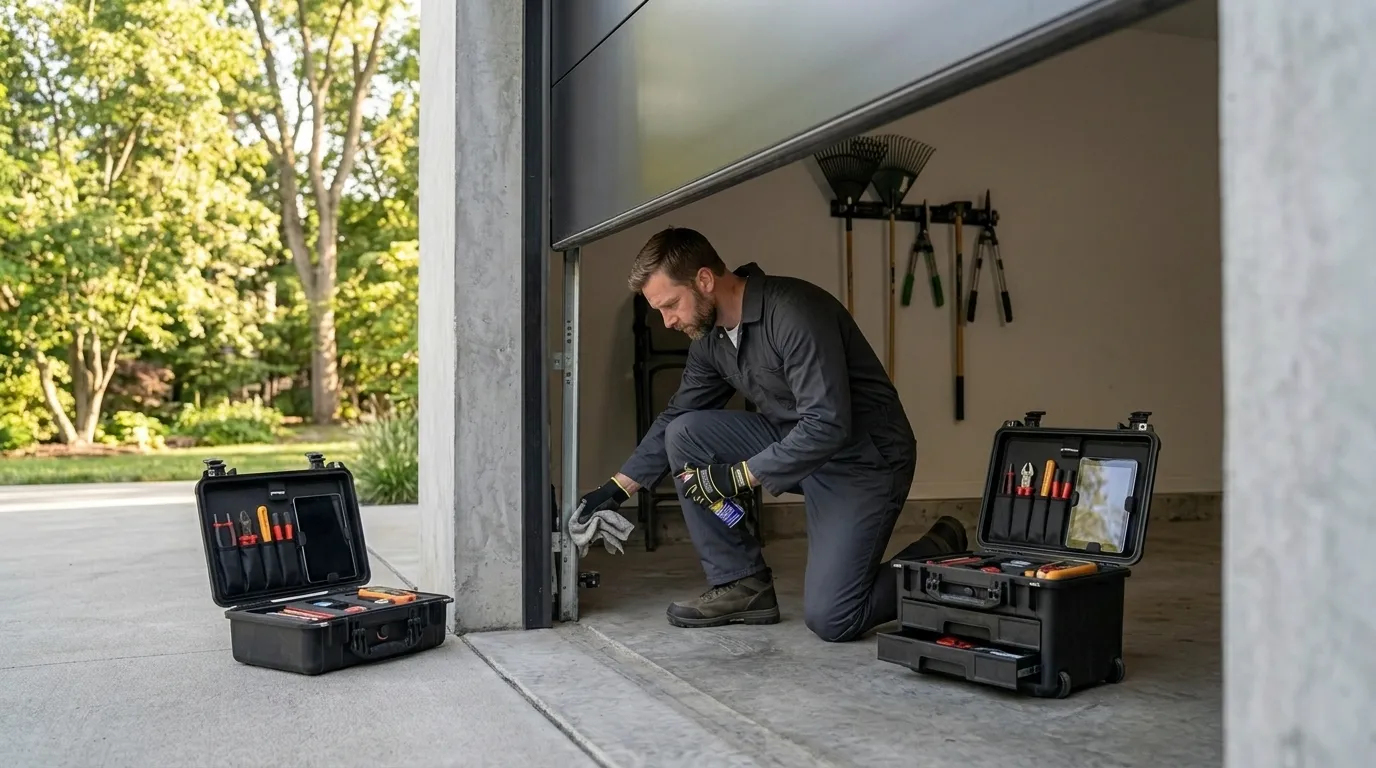
Cleveland's garage doors aren't uniform, but the pattern is consistent: mostly 1960s-70s stock spread across the named areas around the city, from Detroit-Shoreway and Broadway-Slavic Village in close to Old Brooklyn and University Circle further out. A door installed on a house from that build window has usually had at least one seal replacement already, sometimes done well, sometimes done with whatever seal fit the truck that day.
The practical result is that seal condition varies block to block more than you'd expect. A house near Old Brooklyn built in 1962 and one near University Circle built the same year can have completely different jamb conditions depending on whether the garage ever had structural work done. There's no single fix that applies citywide - the fix depends on whether the jamb is still square, whether the track has been adjusted to compensate for a warped door, and how old the actual weatherstripping material is versus how old the door itself is.
Doing Nothing For Now
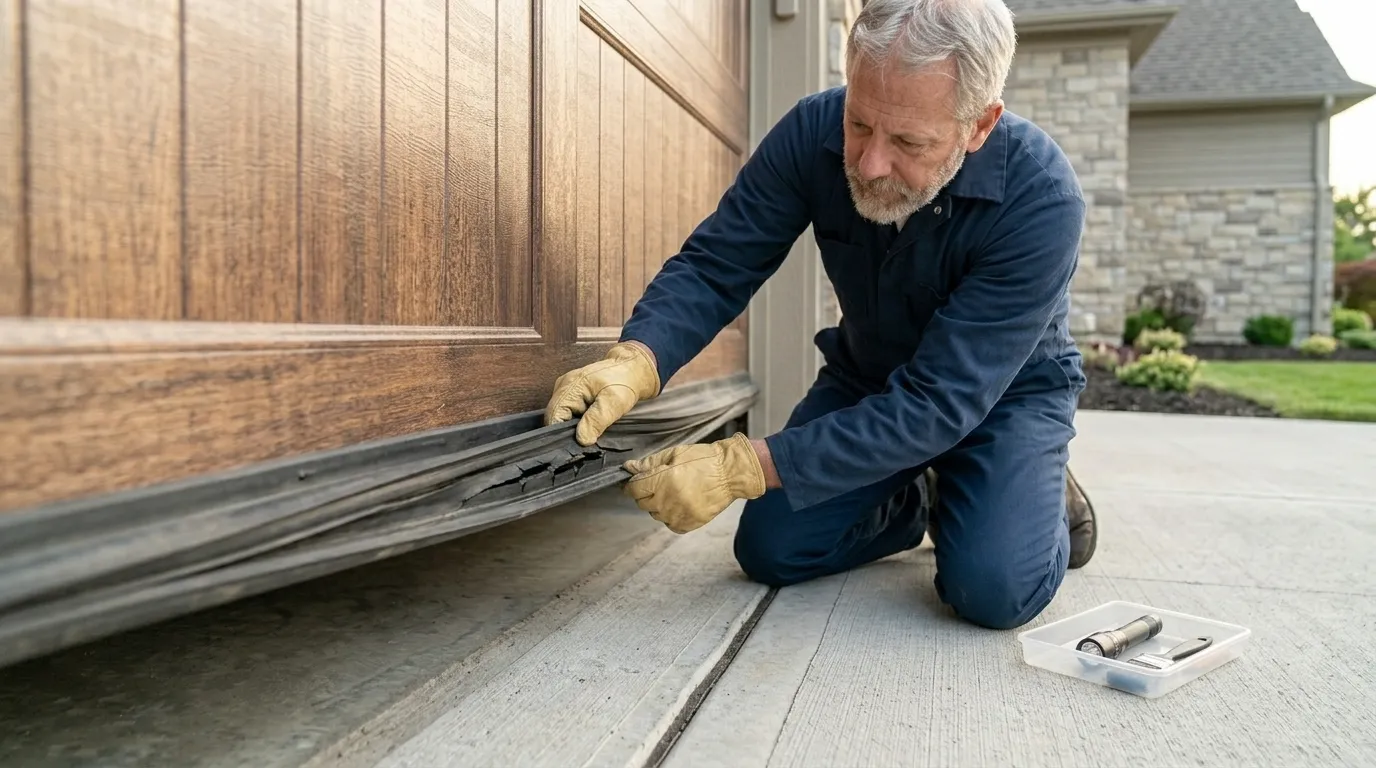
Here's the honest part: sometimes a seal job isn't worth doing on its own. If the jamb has rotted or shifted enough that the door doesn't sit flush no matter what strip you put on it, a new seal will fail again in a season or two, and you've spent money twice. We won't sell you weatherstripping as a fix for a structural gap - that's a jamb repair or a door replacement conversation, not a tape-and-seal job.
If your door still closes square and the draught is limited to a dried-out bottom seal or a cracked side strip, that's a real fix and a cheap one. But if you're feeling cold air through multiple points, or you can see daylight around more than the bottom edge, sealing one spot and calling it done just delays the bigger repair. We'd rather tell you that up front than have you call back in January.
What the Weather Here Does to It
Cleveland sits in a cold, moderate climate band, and that matters more for garage seals than most other repairs. Rubber and vinyl weatherstripping goes brittle with repeated freeze-thaw cycling - it's not one hard freeze that kills a seal, it's the swing back and forth across the freezing point, over and over, all winter. That cycling is exactly what this climate does, and it's why a seal that looked fine in October can crack the first time it drops below freezing overnight and then warms back up the next afternoon.
Ice buildup at the bottom seal is the other issue specific to this kind of winter. Snow melts off the door face during the day, runs down to the bottom seal, and refreezes overnight, pulling the seal away from the slab or tearing it. On older jambs from the 1960s and 70s building stock common here, that repeated tearing eventually opens a gap that no amount of fresh weatherstripping closes without also addressing the jamb underneath it.
How We Can Help
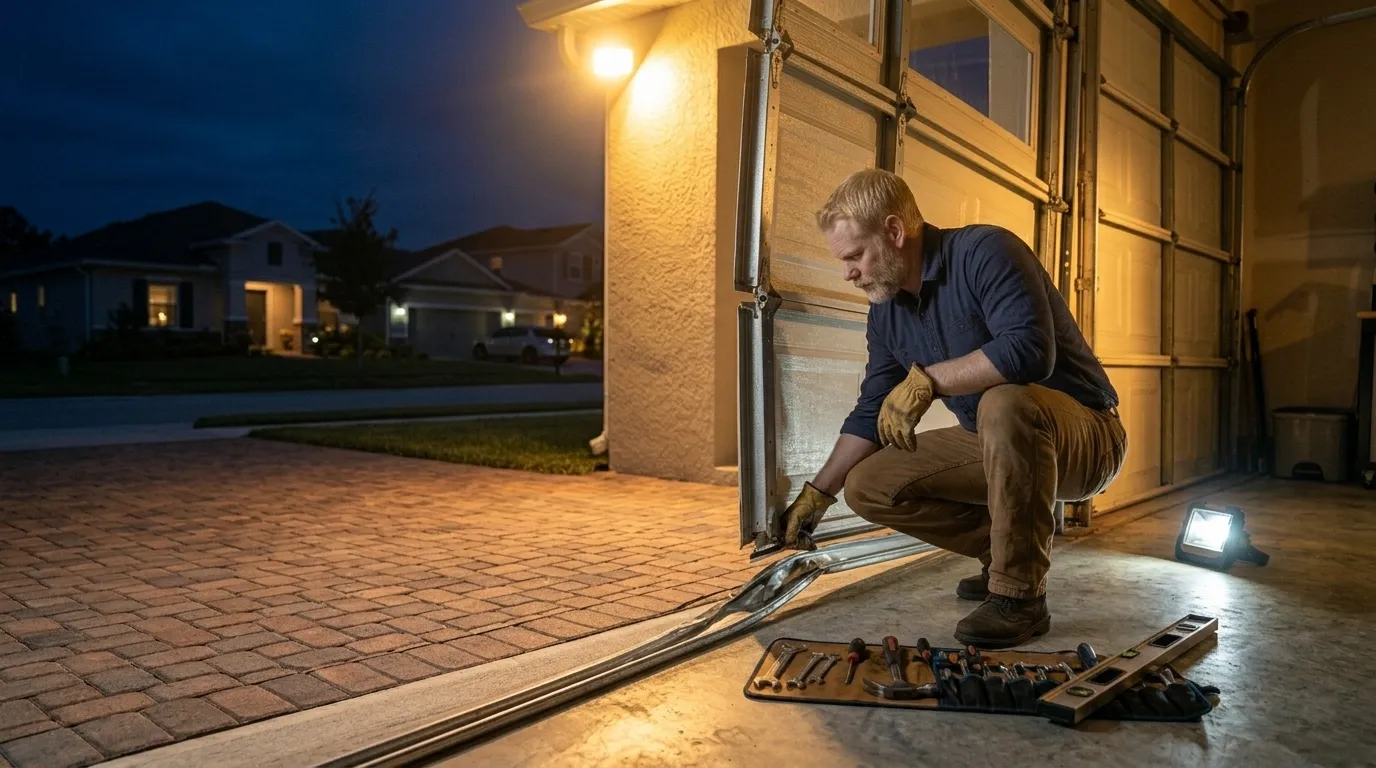
Garage Door Repair
Springs, cables, tracks, rollers, and openers fixed by a tech who explains the problem before touching anything.
Learn more →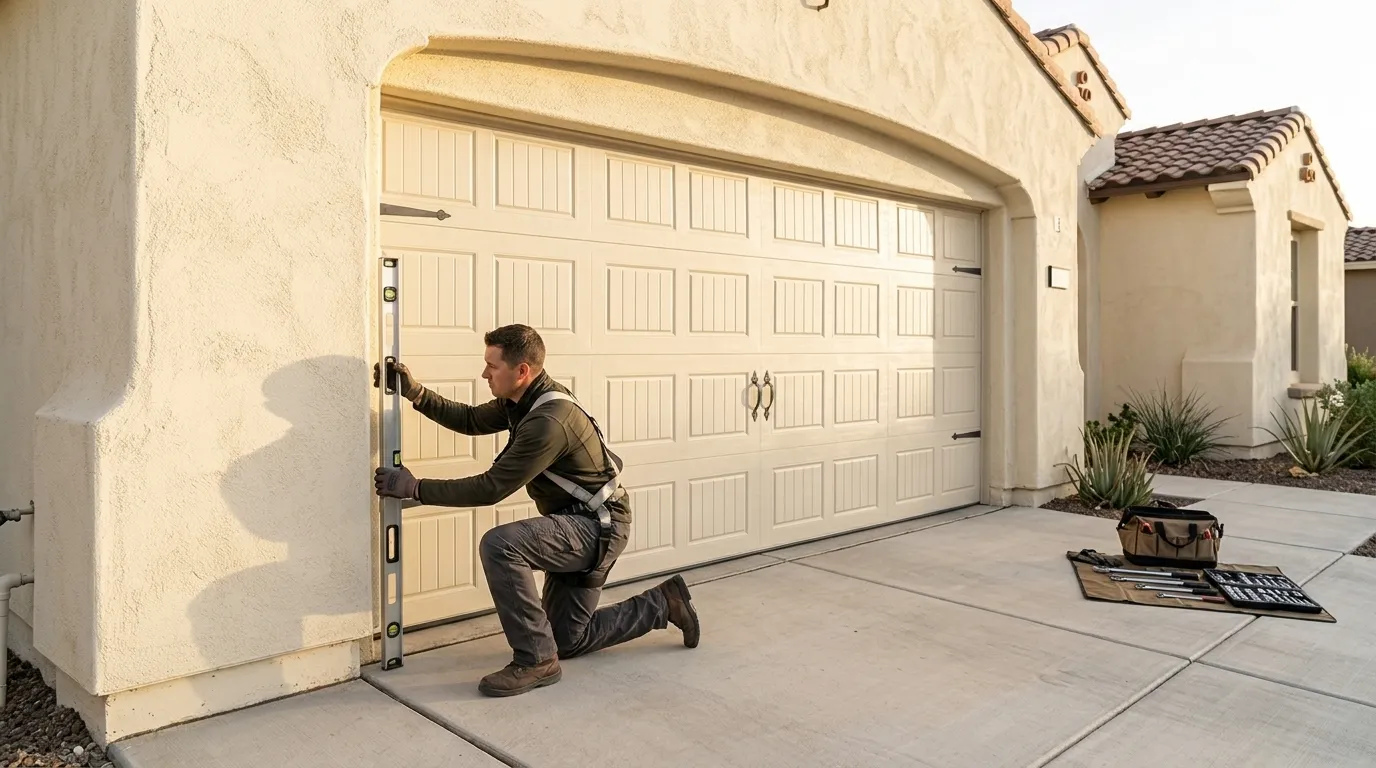
Garage Door Installation
New sectional doors sized and installed for the housing stock actually built in this area.
Learn more →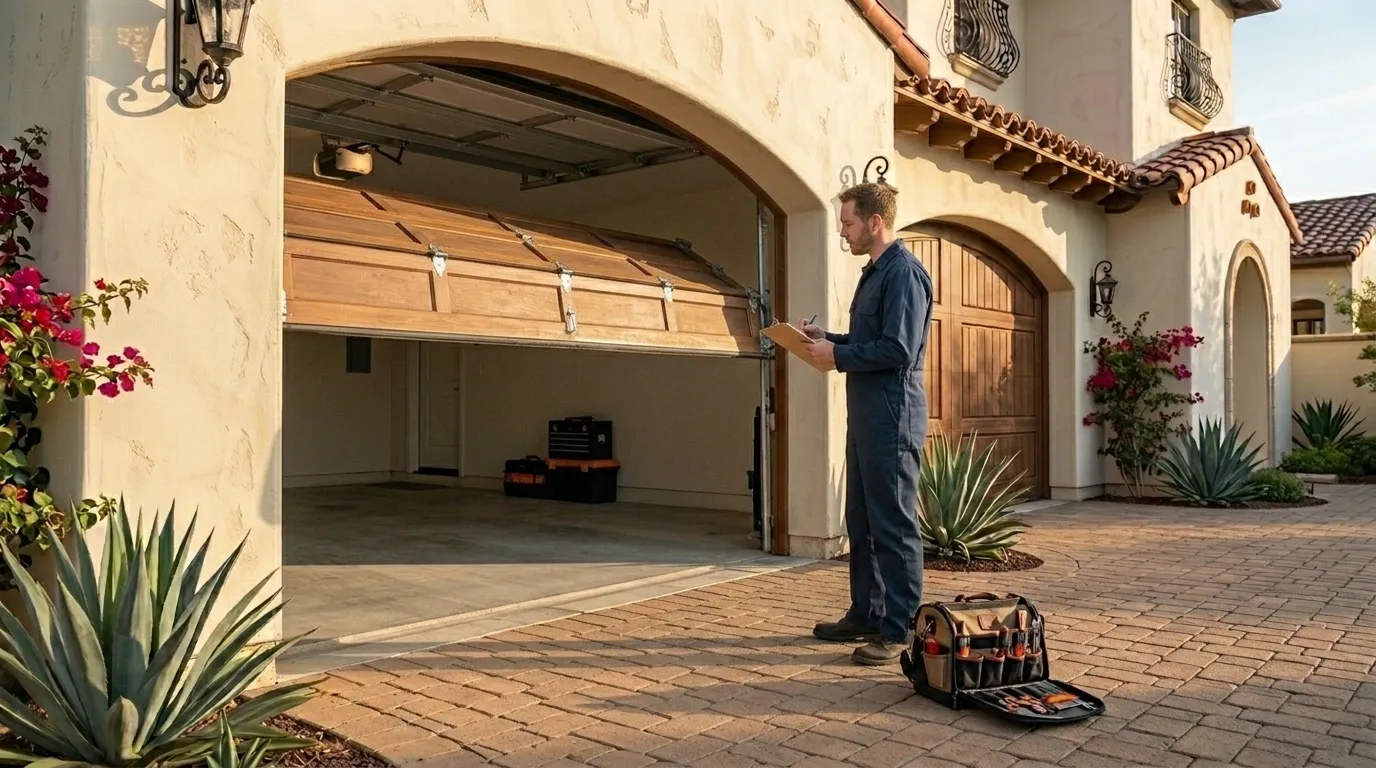
Garage Door Service
Tune-ups, lubrication, and safety checks that catch a small problem before it becomes a service call.
Learn more →Frequently Asked Questions
Why does my garage door seal keep cracking every winter?
It's the freeze-thaw cycling typical of Cleveland winters, not just cold temperatures. Rubber and vinyl seals harden and crack faster when they swing across the freezing point repeatedly rather than staying steadily cold. A seal that's a few years old is already more brittle than it looks.
Is a new seal enough if my garage door is from the 1960s?
Sometimes. If the jamb is still square and the door closes flush, a new seal fixes the draught. If the jamb has shifted or rotted over the decades, a seal alone won't hold - the gap comes back within a season because the seal has nothing solid to press against.
Why is one side of my garage door draughtier than the other?
Side seals dry out unevenly depending on sun and wind exposure, which varies by which way your garage faces. It's common on older single-car doors in this area to see one side strip shrunk and cracked years before the other, even though both were installed at the same time.
Have a Door That Needs a Second Opinion?
Call and describe what it is doing - we will tell you what it likely is.