
Cleveland Garage Door Guide
What Your Garage Door Is Trying to Tell You
What a grinding, popping, or scraping garage door means in Cleveland homes, most built between 1938 and 2004, and why cold winters make these sounds worse.
- Licensed & Insured
- Same-Area Service Calls
- Upfront Pricing
Where People Go Wrong
The mistake we see most in this city is treating every noise the same way: spray some lube on it and hope. That works for a squeaky roller. It does nothing for a spring that's about to let go, and it can mask a track that's pulling loose from the wall.
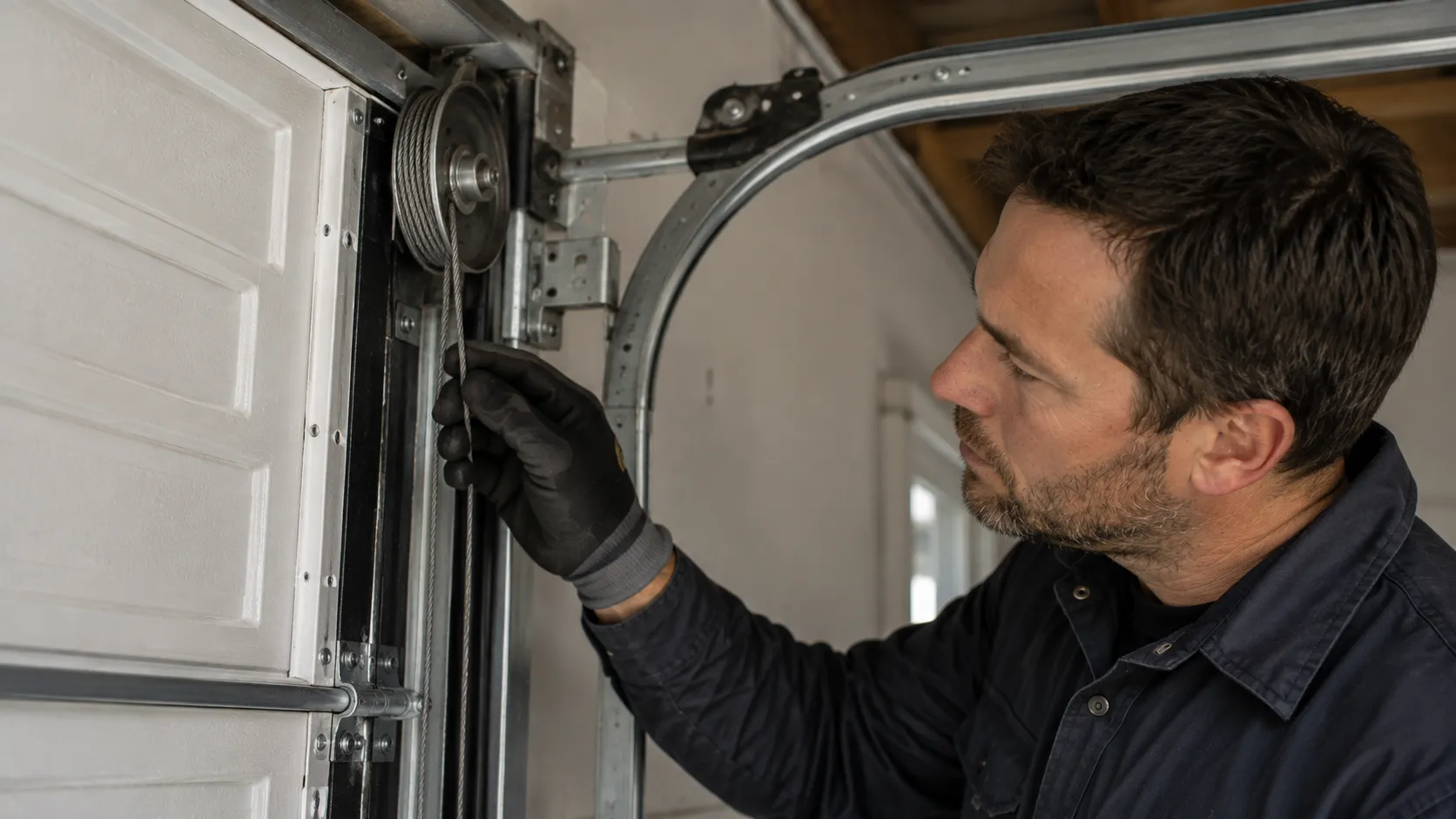
A lot of Cleveland houses, especially the ones going up through Old Brooklyn, Brooklyn Centre, and the streets around Detroit-Shoreway, still have their original hardware or a replacement door hung on the original track from decades back. On a door that old, a new sound usually means a part has moved past worn and into failing. Waiting to see if it goes away is how a stuck cable turns into a door that comes off the track entirely.
The other error is guessing by sound alone over the phone. A grinding noise from a bad roller sounds almost identical to a grinding noise from a bearing plate seizing up, and the fix for one is twenty minutes, the fix for the other means the door comes apart. We'd rather look at it than guess.
The Situation
Housing in this service area mostly went up between 1938 and 2004, with the bulk of it dating to the 1960s and 70s across the 66 neighborhoods and suburbs we cover, from Old Brooklyn and Brooklyn Centre in close to places like Broadview Heights and Orange further out. That matters because a door installed on a house built in 1965 has been through sixty winters of expansion and contraction on steel track, hinges, and springs that were never rated for a sixty-year service life.
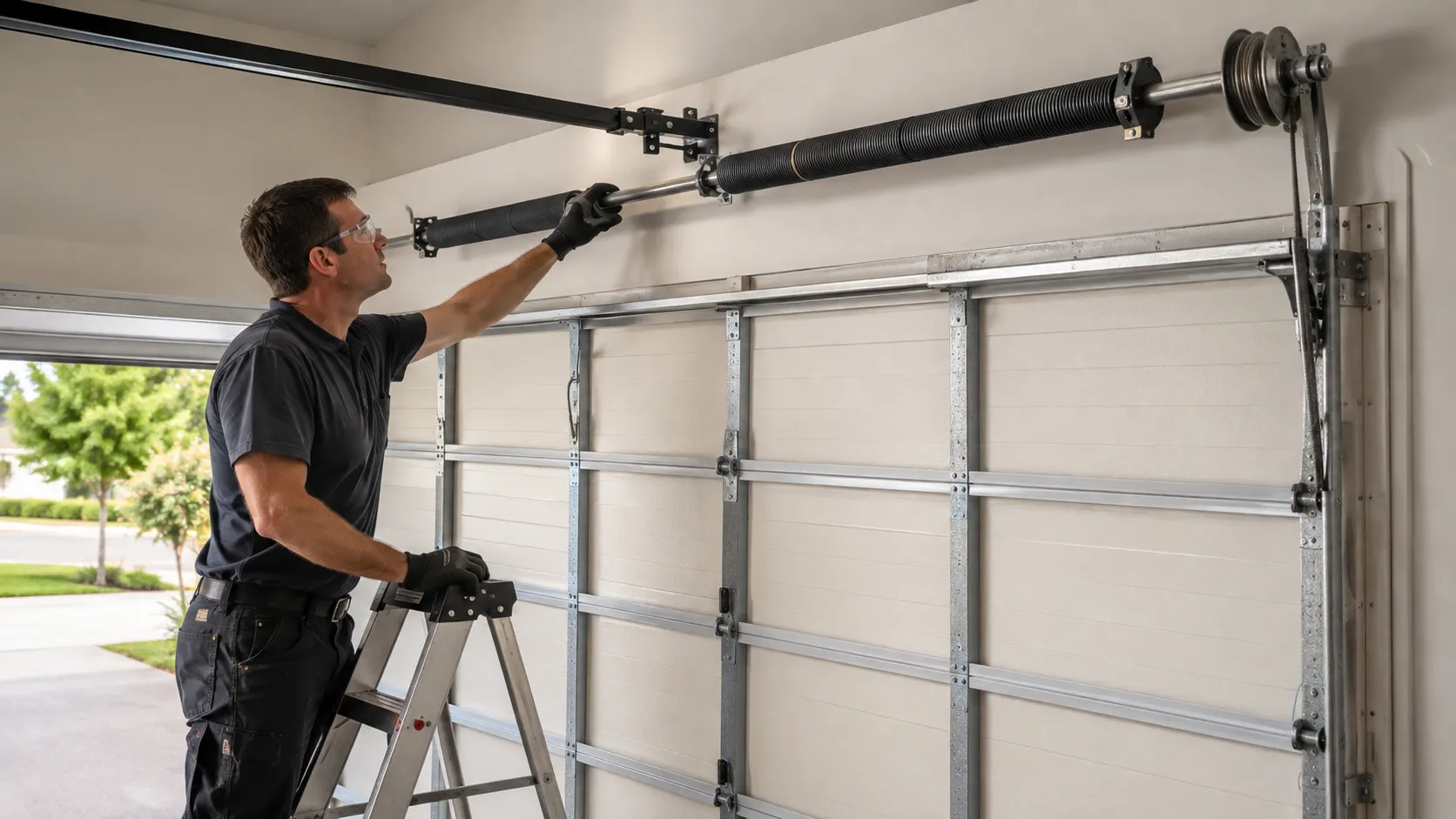
A loud bang usually means a torsion spring has broken - normal after years of cycling, and it's not a DIY fix given the tension involved. A rhythmic thump as the door moves usually points to a flat spot on a roller or a bent track section, both common on houses old enough to have gone through a few different openers and a few different installers, each leaving hardware behind that doesn't quite match. A high-pitched squeal is almost always a bearing that needs grease or replacement, not the whole door.
On a house from this era, the sound is diagnostic. It's telling you which system is wearing out, not just that something, somewhere, needs attention.
Doing Nothing For Now
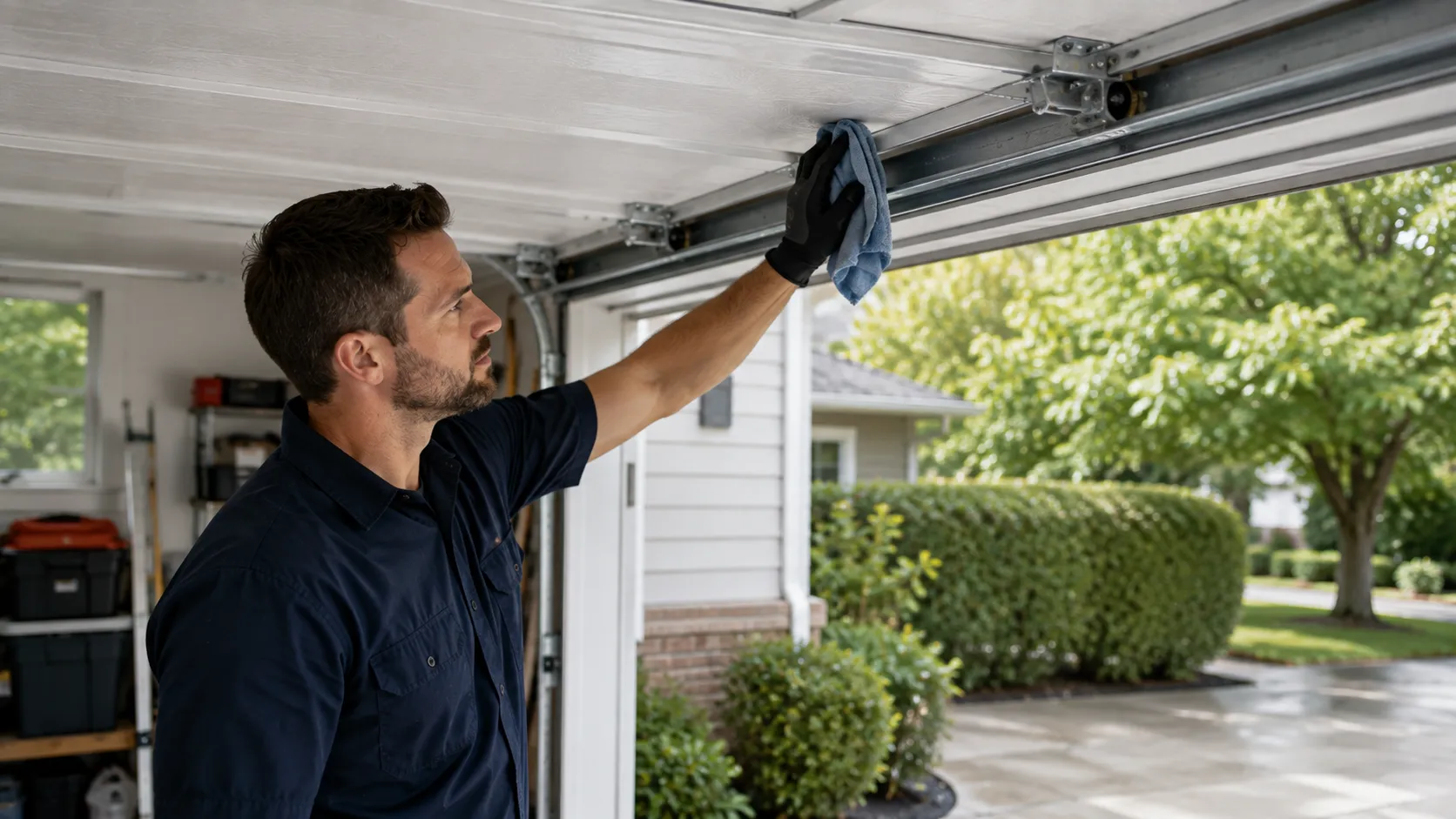
Some noises really can wait. A light squeak on an otherwise smooth-running door isn't an emergency, and if the door still opens evenly and stays level, you've got time to schedule rather than scramble. We won't tell you to replace a door just because it's loud.
What can't wait is a noise that comes with a visible change: cable strands fraying near the bottom bracket, a track bracket pulling away from the framing, or the door catching and jerking partway through its travel. Those are mechanical failures in progress, not cosmetic issues.
We'll also say plainly what we don't do: we don't push a full door replacement on a homeowner when the noise traces back to a single part. If your door is from the 1965-era stock common in this area and everything else is sound, a spring or roller swap is the honest answer, not a new door. Replacement only makes sense when the track is bent beyond adjustment or the door itself has delaminated - not because it's noisy.
What the Weather Here Does to It
This is a cold-climate service area, and that changes how hardware fails, not just when. Steel track and torsion springs contract in cold air, which tightens tolerances that were fine in July. A door that ran quiet all summer can start grinding in January simply because the metal shrank enough to bind against a roller that was already slightly worn.
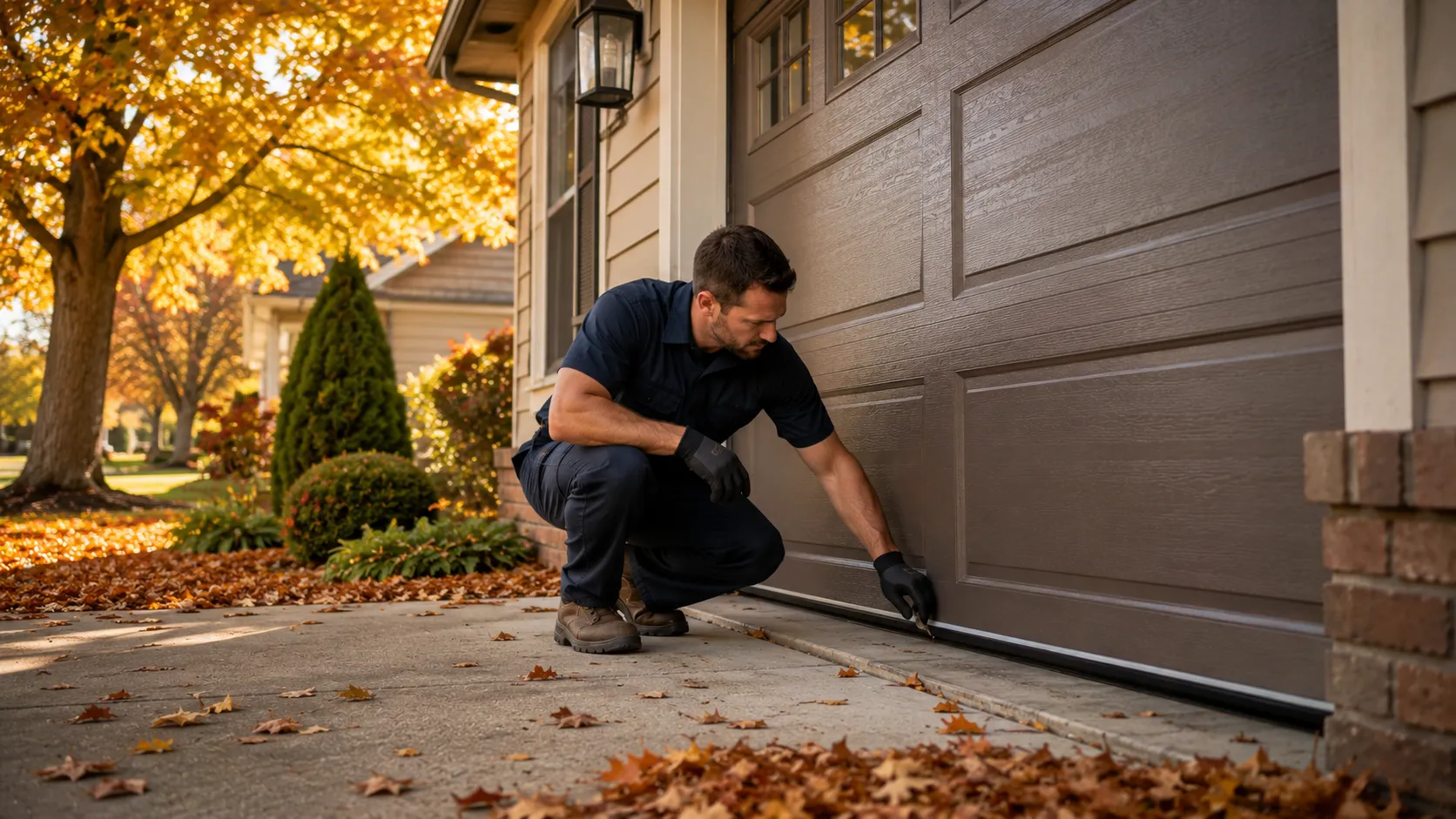
Grease also matters more here than it would somewhere warmer. Standard lubricant thickens in cold weather and stops doing its job right when you need it most, which is why a squeal that shows up on the first hard freeze often isn't a new problem - it's an old one the cold finally exposed. We use lubricant rated for the temperature swings this area actually gets, not a one-size product.
Condensation is the other piece. Temperature swings between a heated garage and a cold night cause moisture to form on metal parts, and that moisture plus steel plus years of age is what turns a quiet bearing into a squealing one by February. If your door gets noisier every winter and quiet again by spring, that's not your imagination - that's the climate working on hardware that's been out there since the Johnson administration in some of these houses.
How We Can Help
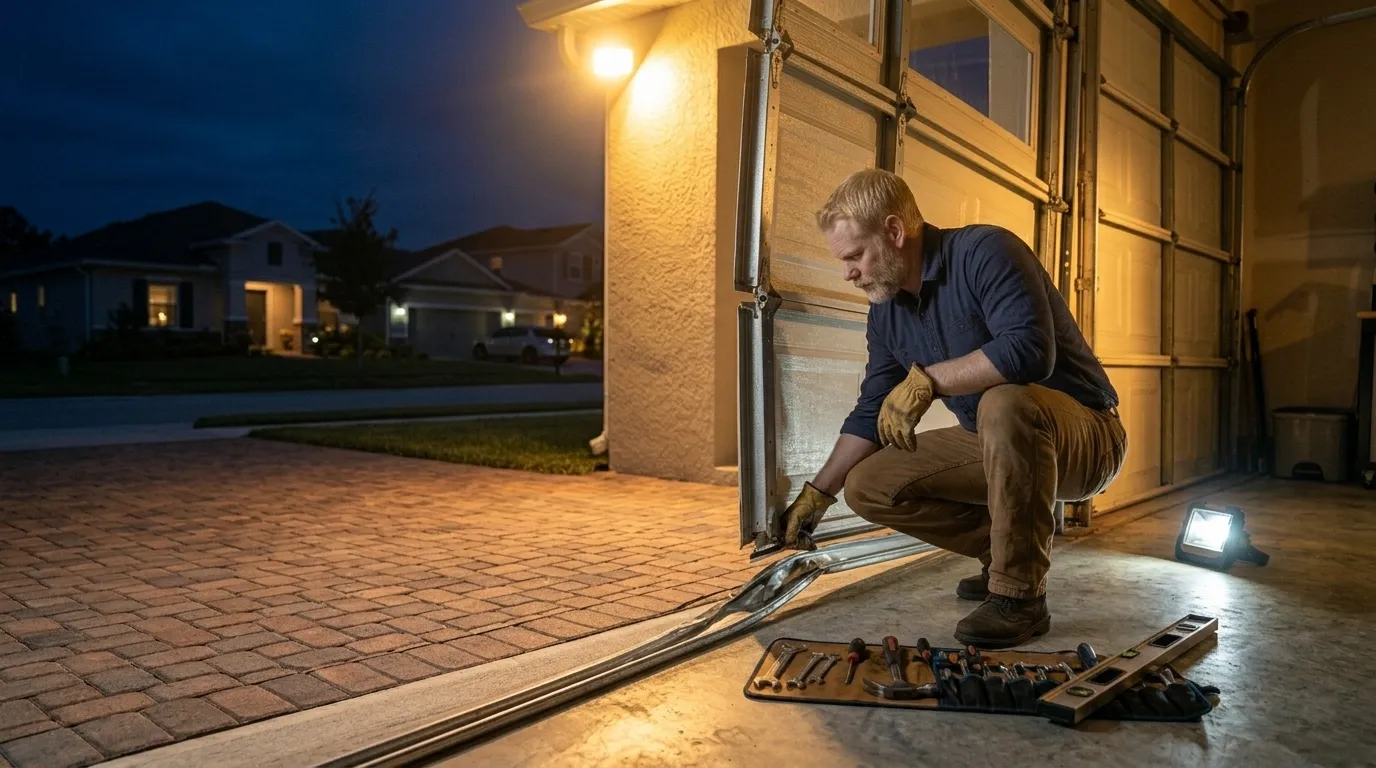
Garage Door Repair
Springs, cables, tracks, rollers, and openers fixed by a tech who explains the problem before touching anything.
Learn more →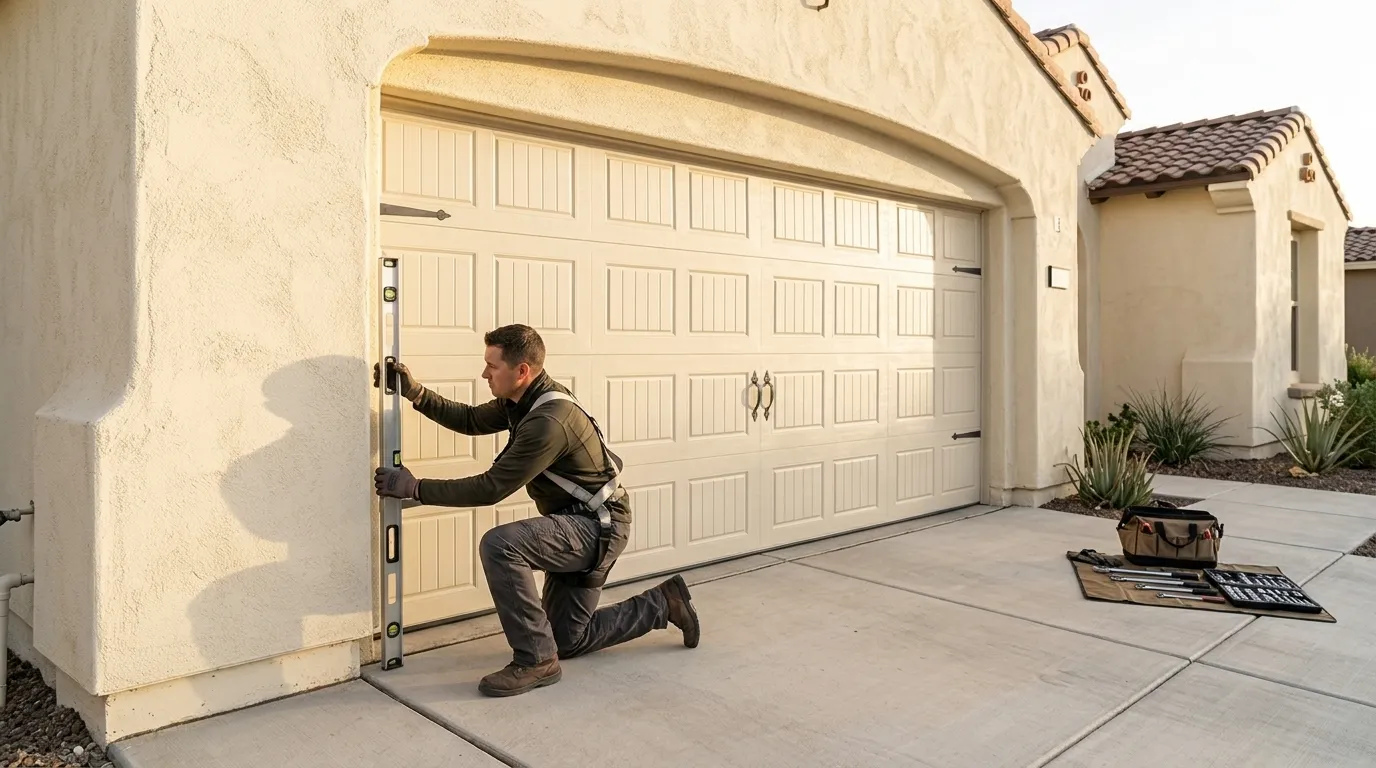
Garage Door Installation
New sectional doors sized and installed for the housing stock actually built in this area.
Learn more →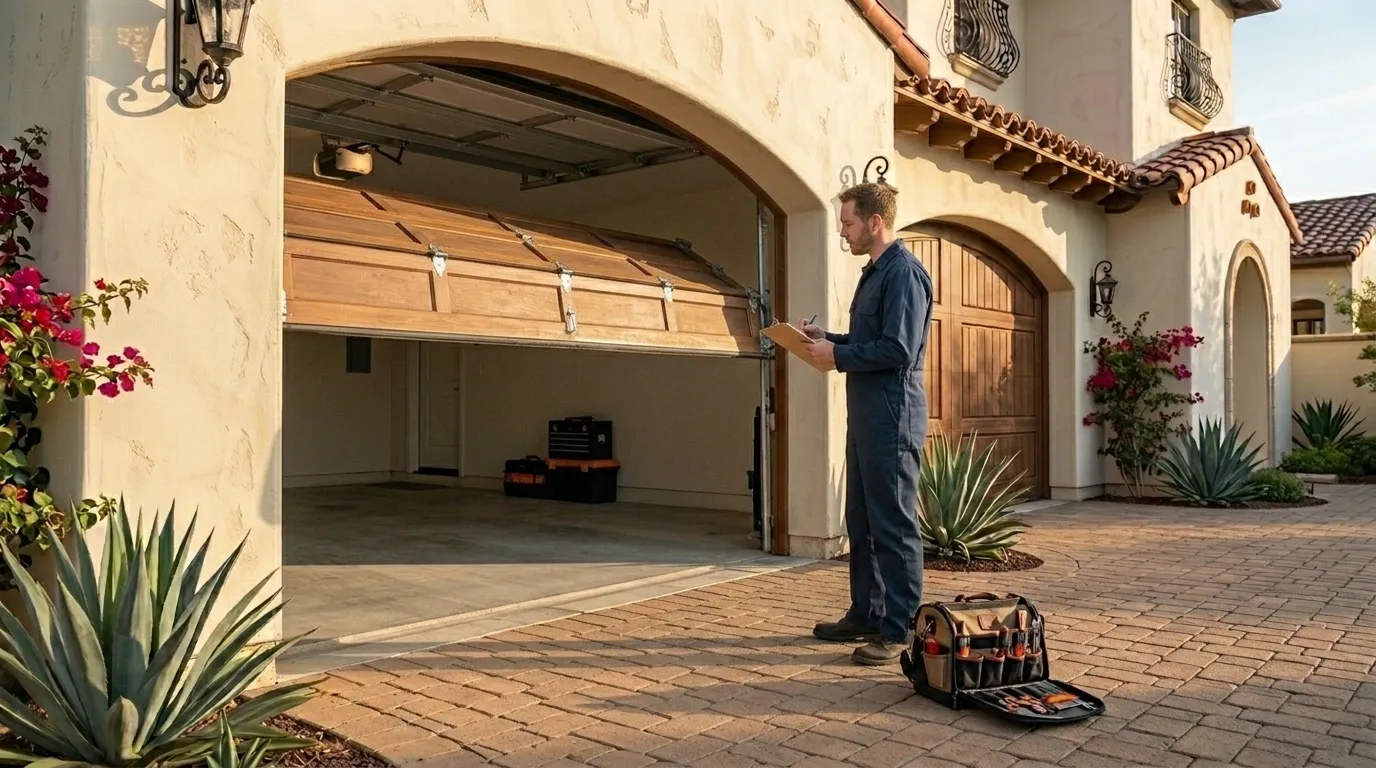
Garage Door Service
Tune-ups, lubrication, and safety checks that catch a small problem before it becomes a service call.
Learn more →Frequently Asked Questions
My garage door started grinding once it got cold. Is that a coincidence?
No. Cold air makes steel track and springs contract, tightening tolerances that were fine in warmer months. If a roller or bearing was already a little worn, the cold is often what pushes it from quiet to loud. It's usually not a new failure, just an old one showing up on the first hard freeze.
How do I know if a noise means the spring is about to break?
A spring nearing failure often makes a creaking or straining sound as the door lifts, sometimes with visible gaps in the coil. A sudden loud bang usually means it's already broken. Either way, don't test it by hand - torsion springs hold enough tension to cause serious injury.
My door is original to a house built in the 1960s. Should I just replace it?
Not necessarily. If the noise traces to one part - a roller, a bearing, a cable - repair usually makes more sense than replacement, even on original hardware. Replacement is worth it when the track is bent beyond adjustment or the door panels have deteriorated, not just because it's old.
Does regular lubricant work fine through a Cleveland winter?
Standard grease thickens in cold weather and stops flowing into the parts that need it, which is often why doors get noisier in January than they were in August. A lubricant rated for wider temperature swings holds up better through the cold months here.
Have a Door That Needs a Second Opinion?
Call and describe what it is doing - we will tell you what it likely is.