
Cleveland Garage Door Guide
What Happens to Your Opener When the Power Goes Out in Cleveland
Cleveland houses built 1938-2004, mostly 1960s-70s stock, mean older openers with no battery backup. Here's what a power cut does to yours and what to check first.
- Licensed & Insured
- Same-Area Service Calls
- Upfront Pricing
Where People Go Wrong
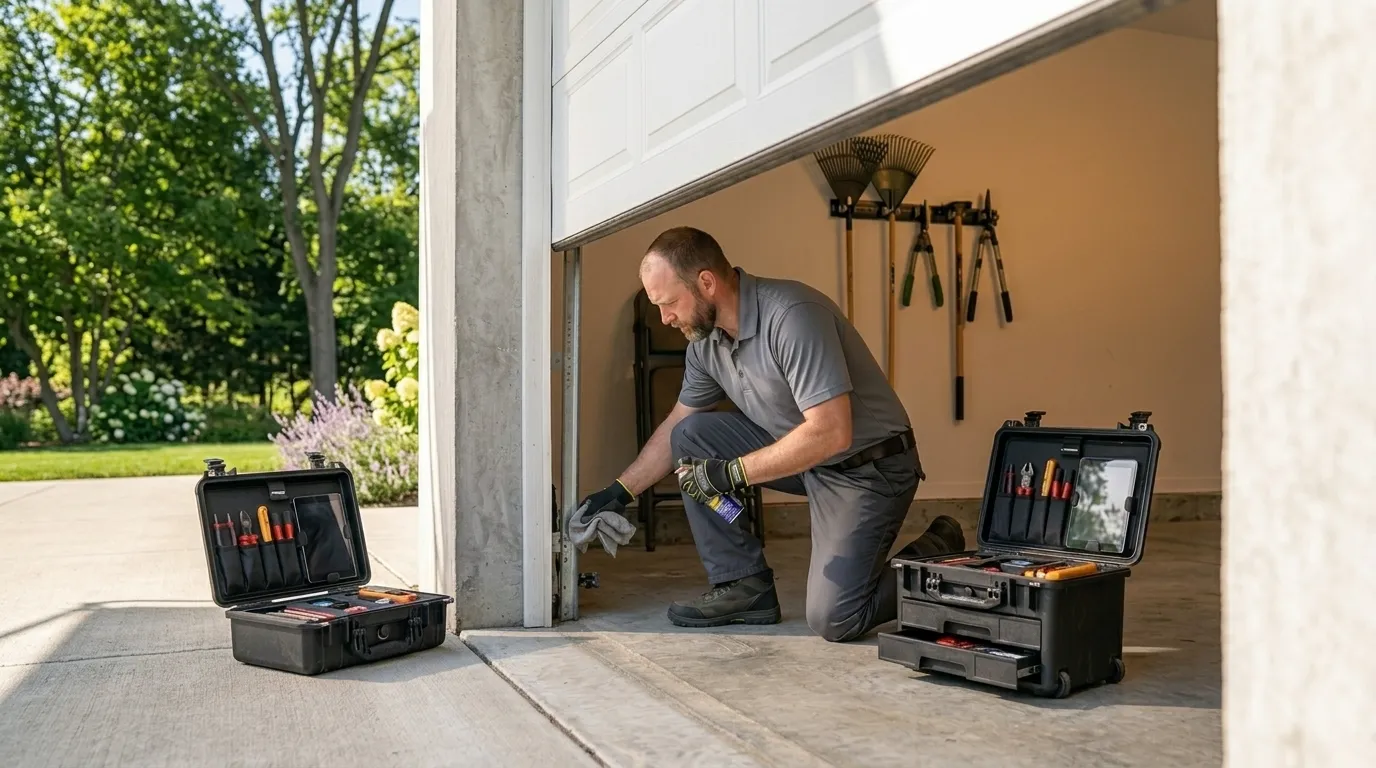
The most common mistake we see is a homeowner who assumes their opener has a battery backup because newer models do. If your house went up anywhere in the 1960s or 70s wave that makes up most of Cleveland's stock, the opener that's currently mounted on your ceiling track has probably been swapped once, maybe twice, since the house was built - and there's a real chance the replacement unit still has no backup battery in it. When the power cuts, that door does not move, full stop, until you find the manual release cord and pull the trailer down by hand.
The second mistake is forcing the door up by hand without releasing the opener carriage from the track first. On a torsion-spring door that's fine.
On an older extension-spring setup, common in houses from the earlier end of that 1938-1965 build range, pulling against a still-engaged opener can bend the arm bracket. Find the release cord before a storm knocks the power out, not during one.
The Situation
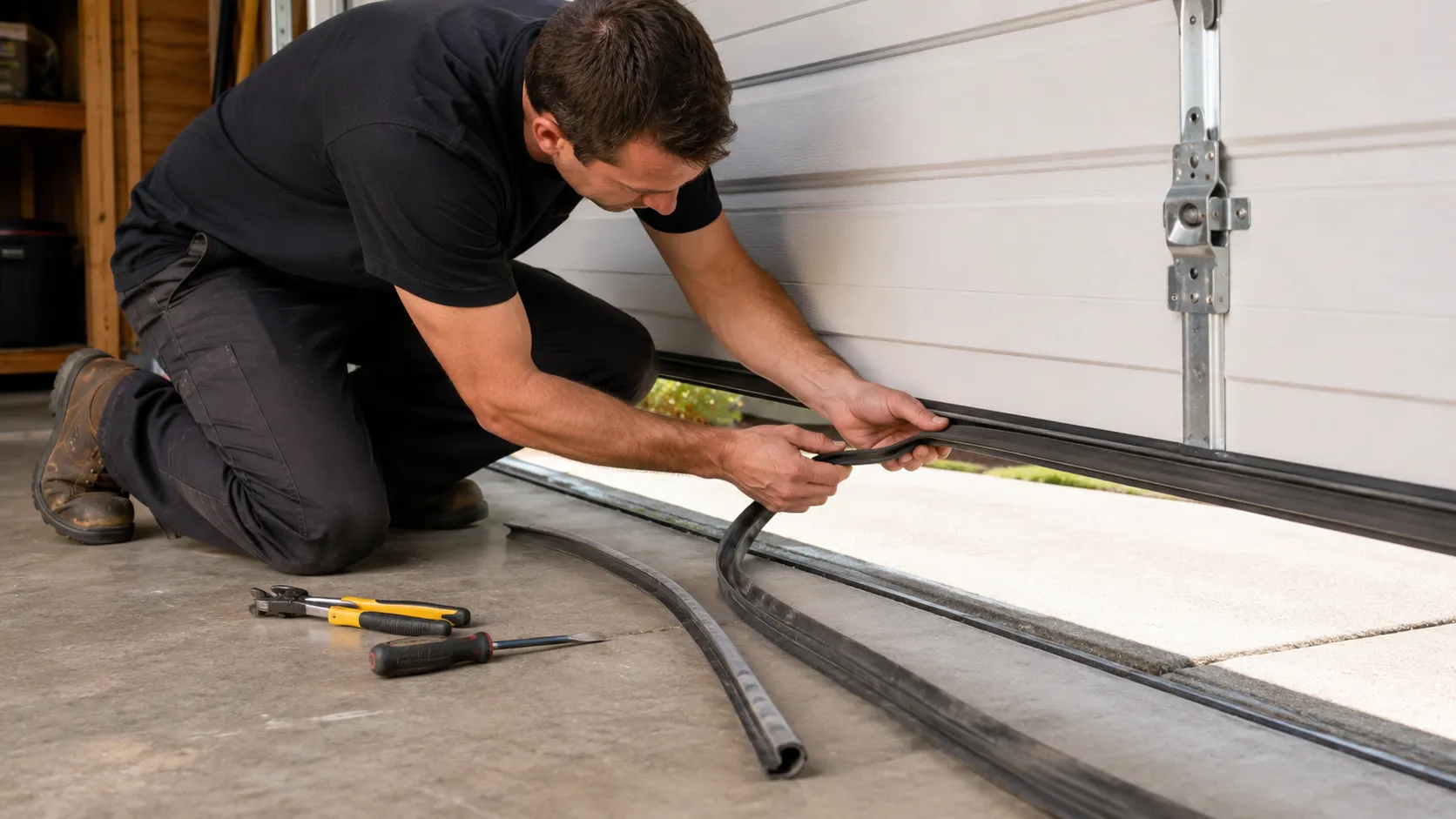
Cleveland's housing stock runs from 1938 to 2004, with the median build year sitting at 1965, and most of the neighborhoods on this side of the city - from Old Brooklyn to Detroit-Shoreway to Broadway-Slavic Village - carry that same 1960s-to-70s core. That matters for openers because a unit installed in a house from that era has typically been through at least one or two replacement cycles already, and not every replacement included battery backup, especially on jobs done as a straight swap rather than a full upgrade.
The result is a lot of doors in this area that are opener-dependent for daily use but have zero backup the moment the grid drops. If you don't know whether your unit has one, look for a small battery compartment on the head unit itself, usually near the light lens. No compartment means no backup, and that's the point where the manual release cord stops being a backup plan and becomes the only plan.
Doing Nothing For Now
Here's the honest version: if your opener works fine day to day and you haven't had a power cut leave you stuck, there's no reason to replace it just because it lacks battery backup. Retrofitting backup into an opener that wasn't built for it usually isn't possible - it's a full unit swap, not an add-on part, and we won't sell you an add-on that doesn't exist.
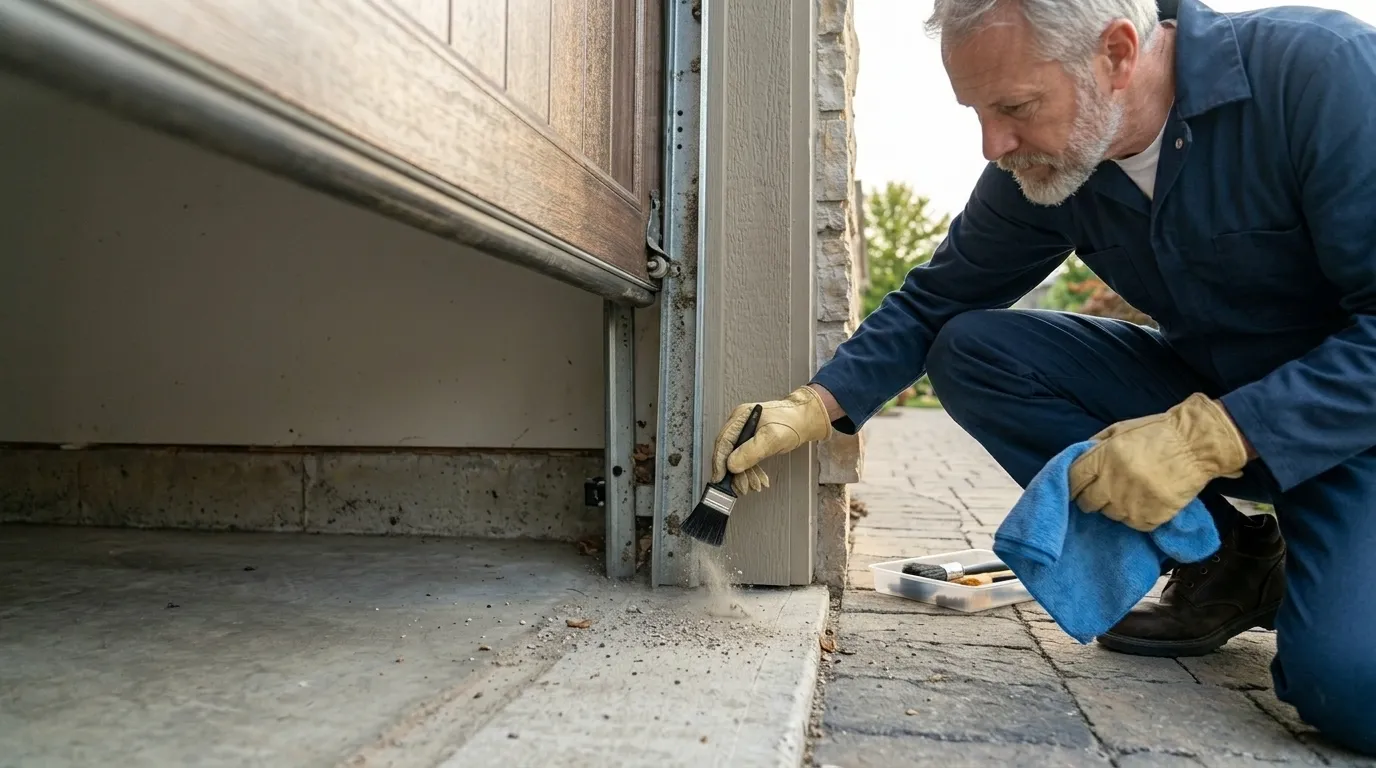
What's worth doing instead is a five-minute check: locate the manual release cord, pull it once with the door closed so you know what it feels like, and confirm the door moves freely by hand. That's the whole fix for most houses. If the door is hard to lift by hand even with the opener released, that's not a power problem - that's a spring problem, and it's worth a separate call before winter, not after the next outage.
What the Weather Here Does to It
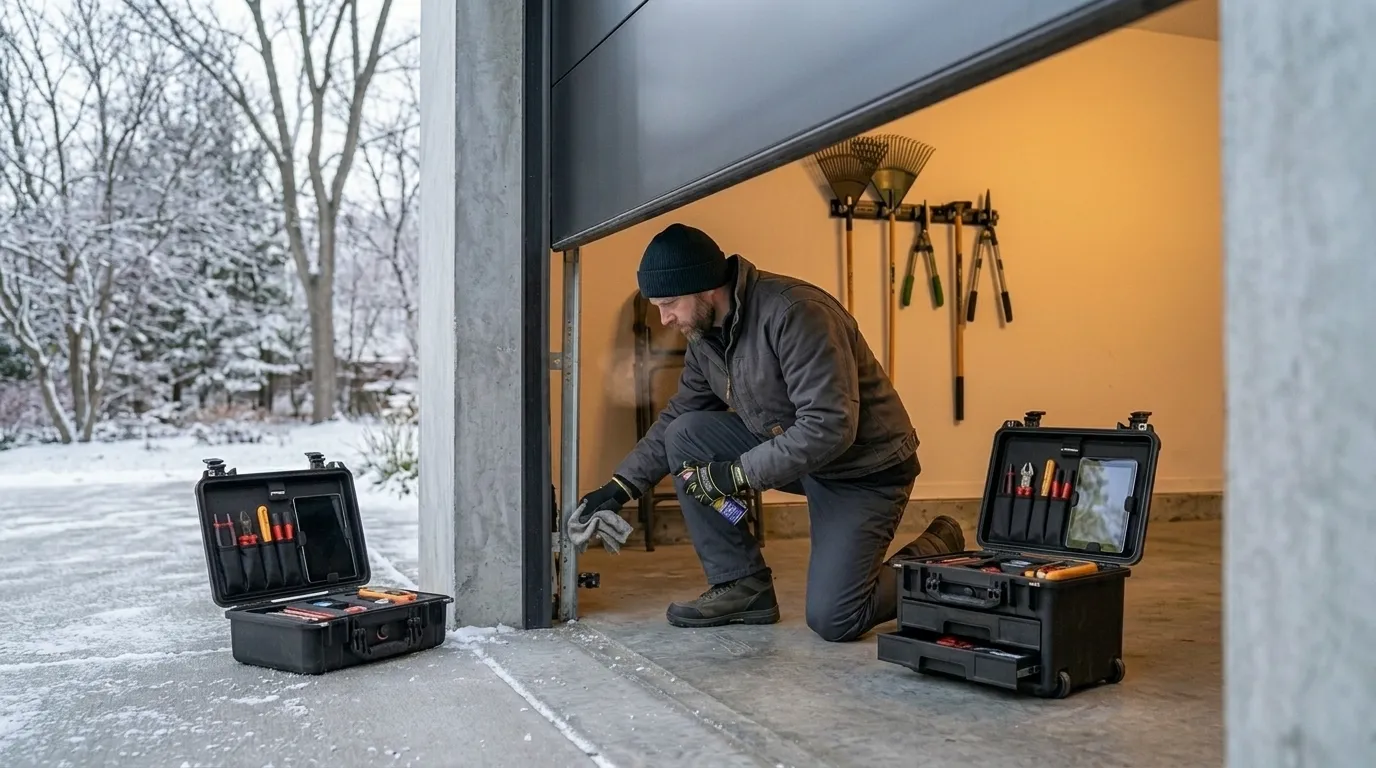
Cleveland sits in a cold, moderate climate band, and the openers most affected by that aren't the electronics so much as the moving parts around them. Cold makes garage door lubricant stiffen, torsion springs lose a little tension, and rollers bind slightly in the track - none of which shows up until the day the power also cuts, and now you're trying to hand-lift a door that's already fighting the cold on top of having no motor.
That combination is why winter storms are when opener problems actually surface here, even though the opener itself didn't change. A door that lifted easily by hand in September can feel noticeably heavier in January, cold-stiffened hardware plus a dead opener at the same time. If you're checking your manual release before a storm season, that's also the right moment to check how the door lifts by hand - smooth is fine, a fight means the springs need a look before the cold gets worse.
How We Can Help
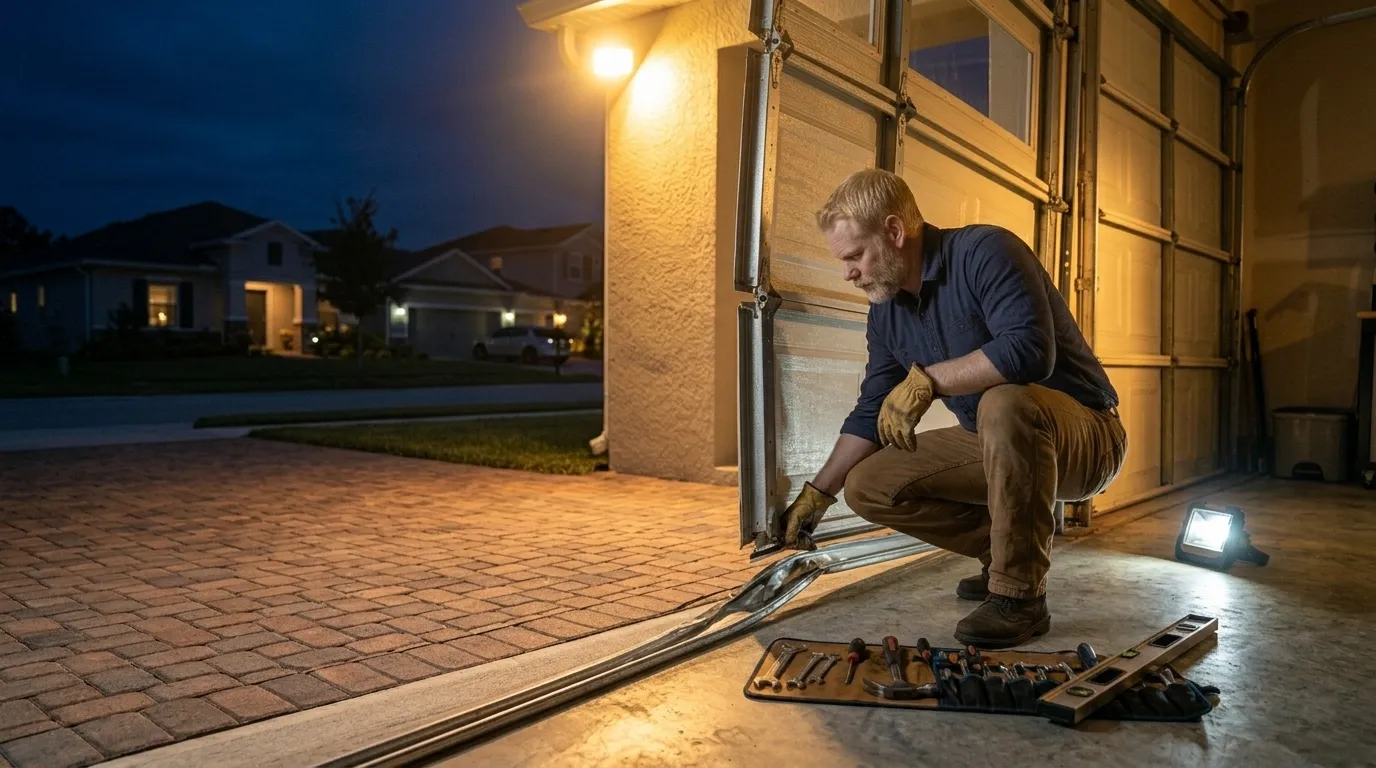
Garage Door Repair
Springs, cables, tracks, rollers, and openers fixed by a tech who explains the problem before touching anything.
Learn more →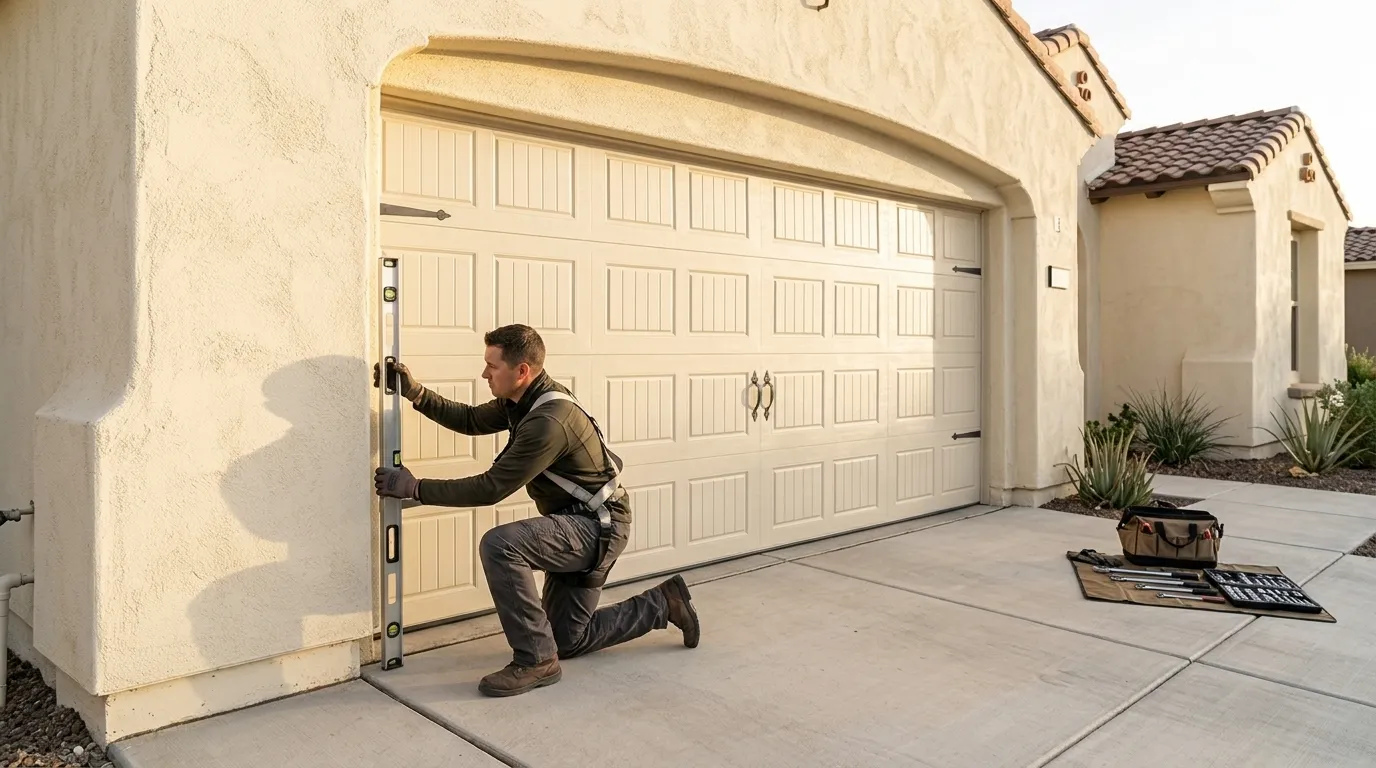
Garage Door Installation
New sectional doors sized and installed for the housing stock actually built in this area.
Learn more →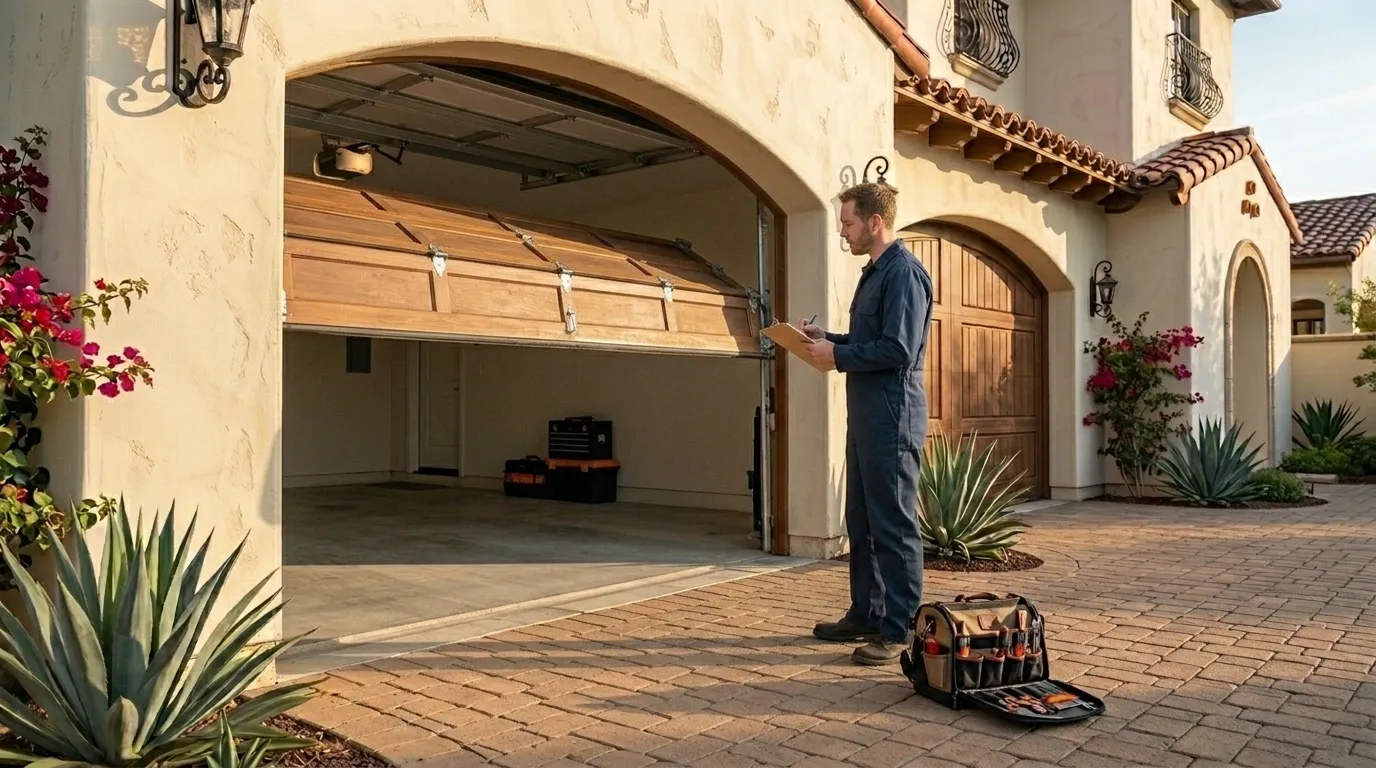
Garage Door Service
Tune-ups, lubrication, and safety checks that catch a small problem before it becomes a service call.
Learn more →Frequently Asked Questions
Does my garage door opener have a battery backup?
Look at the head unit - the box mounted on the ceiling track - for a small compartment near the light lens. If there's no visible battery slot, your opener doesn't have one. Given that a lot of Cleveland's opener stock dates back through 1960s-70s houses with replacement units installed over the years, plenty don't.
Can I add a battery backup to my existing opener?
Only if the unit was designed for it. Most older openers, especially ones installed as a straight swap rather than a full upgrade, have no slot or wiring for a battery pack, and there's no reliable way to retrofit one. If backup power matters to you, that means a new opener, not an add-on.
Is it safe to lift the door by hand during a power cut?
Yes, once you've pulled the manual release cord to disconnect the opener carriage from the track. Skipping that step and forcing the door against an engaged opener, especially on older extension-spring doors common in Cleveland's earlier housing stock, risks bending the arm bracket.
Have a Door That Needs a Second Opinion?
Call and describe what it is doing - we will tell you what it likely is.