
Cleveland Garage Door Guide
What Wind Does to a Wide Door in Cleveland
Most Cleveland garage doors date to the 1960s and 70s, before wide double doors carried wind bracing. Here's what that means for your door now.
- Licensed & Insured
- Same-Area Service Calls
- Upfront Pricing
Where People Go Wrong
The mistake we see most is owners treating a wide double door like a smaller single door with two extra feet of steel. It doesn't work that way. A 16-foot section catches roughly twice the wind load of an 8-foot section, and that force pushes straight into the track and the top roller bracket.
If the door was built before wind bracing was standard on wide spans, there's nothing distributing that load across the panel. It just goes to whichever hinge or bracket happens to be weakest that day.
Housing in the Cleveland service area runs 1938 to 2004, with the bulk of it going up in the 1960s and 70s. That matters here because horizontal wind struts on wide sections weren't common practice on doors installed in that window. A lot of the double-wide doors still hanging on houses from that era are original or close to it, and they were built to a lighter standard than what goes in today.
Owners assume a door that's held up for decades will keep doing it. Age doesn't reinforce a panel - it just means the steel has had more years to fatigue at the same stress points.
The Situation
On a wide door, wind doesn't hit the panel evenly. It concentrates load at the center of the span, where there's the most unsupported steel between the side tracks. On a door without a horizontal strut running across that midpoint, the panel can bow inward and outward with gusts, and every cycle works the top fasteners and the track brackets a little looser.
You won't see it happen. You'll notice it as a door that suddenly rattles on windy days when it didn't used to, or a track that's pulled slightly away from the jamb on one side.
This shows up more on wide doors than single doors for a simple reason: a single door's span is short enough that the steel itself resists the flex without extra bracing. Double doors don't get that margin. If your house is part of the 1960s-70s stock that makes up most of the area, and you've got a two-car door with no visible horizontal bar across the back of the panel, that's the door most likely to be working against itself every time the wind picks up.
Doing Nothing For Now
Not every wide door needs a strut kit today. If the door is tracking straight, the brackets are tight, and you're not hearing new rattling on windy days, there's no reason to add bracing you don't need yet. That's the honest limitation here: we can't tell you your specific door needs reinforcement without looking at it, and we're not going to sell a strut kit to someone whose door is fine.
What we'd say instead: keep an eye on the top corners of the panel and the point where the track meets the wall. Those are the first places a wide door shows stress before anything fails outright.
If you're not seeing movement there, doing nothing for now is a reasonable call. The doors that need attention are the ones already showing it, not every double door in a house built in the 60s.
What the Weather Here Does to It
Cleveland sits in a cold, moderate climate band, and that cold does something specific to older wide doors that heat doesn't: it stiffens the steel and shrinks the gap tolerances at the same time metal fasteners contract. A bracket that was snug in August can be a little loose by January, and that's exactly when wind gusts are pushing the hardest on the panel. It's not one dramatic event - it's the same wind load hitting hardware that's already lost some of its grip to the cold.
This is why we tell owners with original or near-original 1960s and 70s doors to get the wide ones looked at before the coldest stretch, not after. A strut and a set of tightened brackets cost far less than a track that's been worked loose all winter and finally lets go on the one day it's holding back a real gust.
How We Can Help
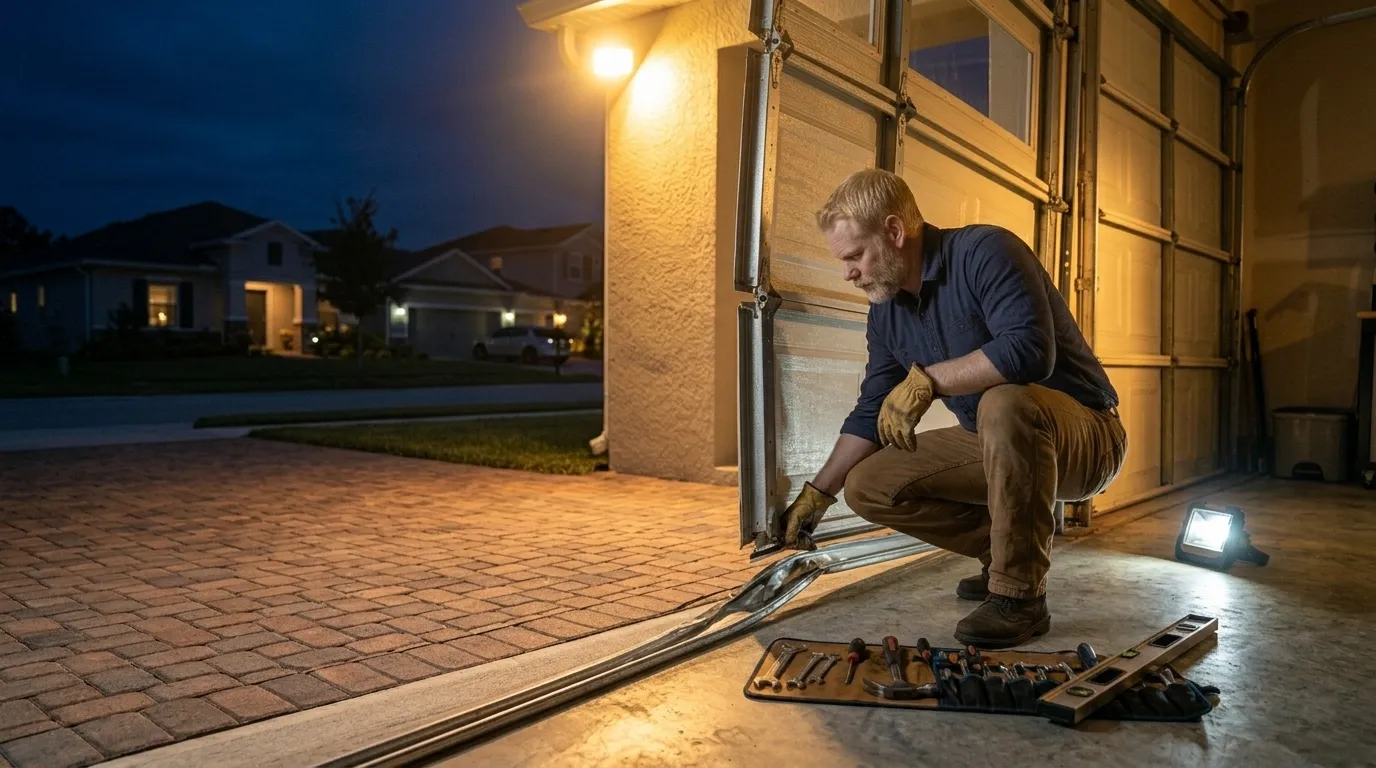
Garage Door Repair
Springs, cables, tracks, rollers, and openers fixed by a tech who explains the problem before touching anything.
Learn more →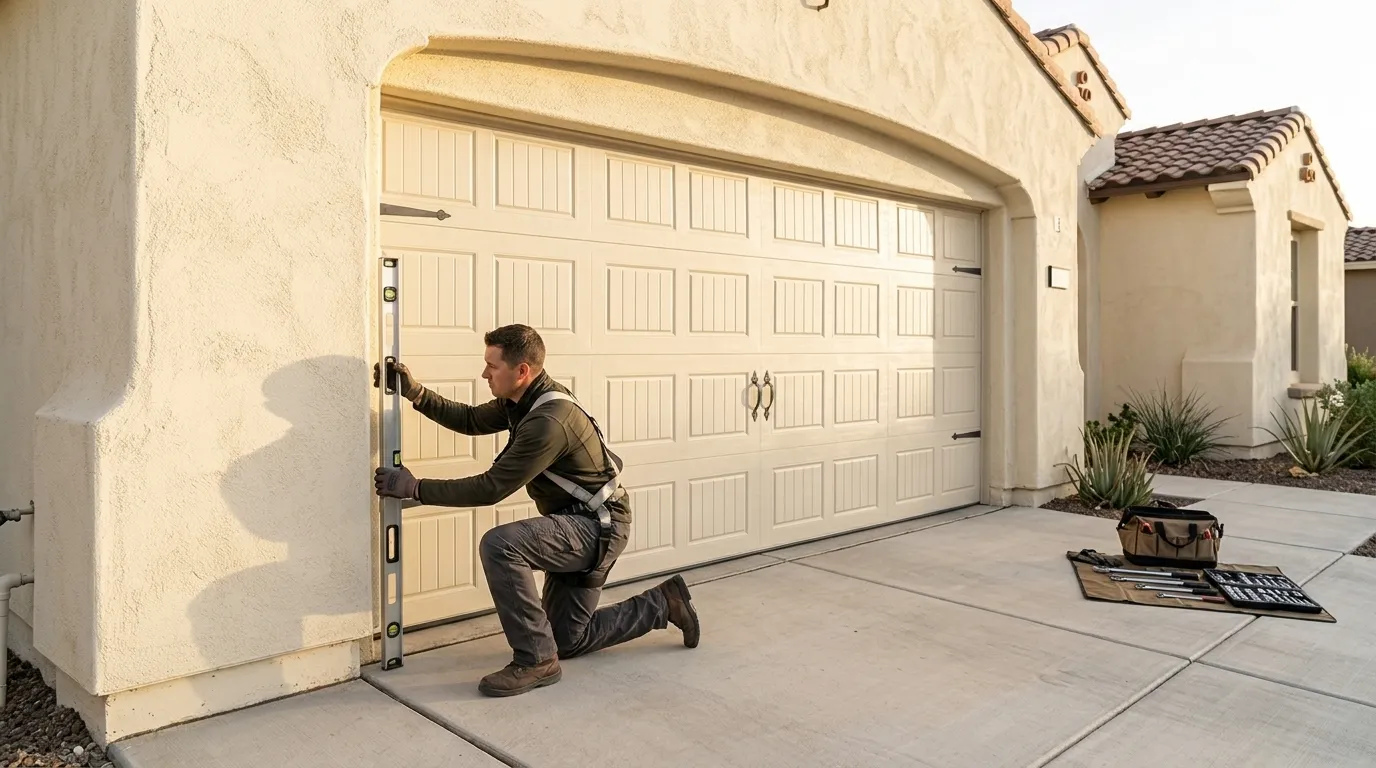
Garage Door Installation
New sectional doors sized and installed for the housing stock actually built in this area.
Learn more →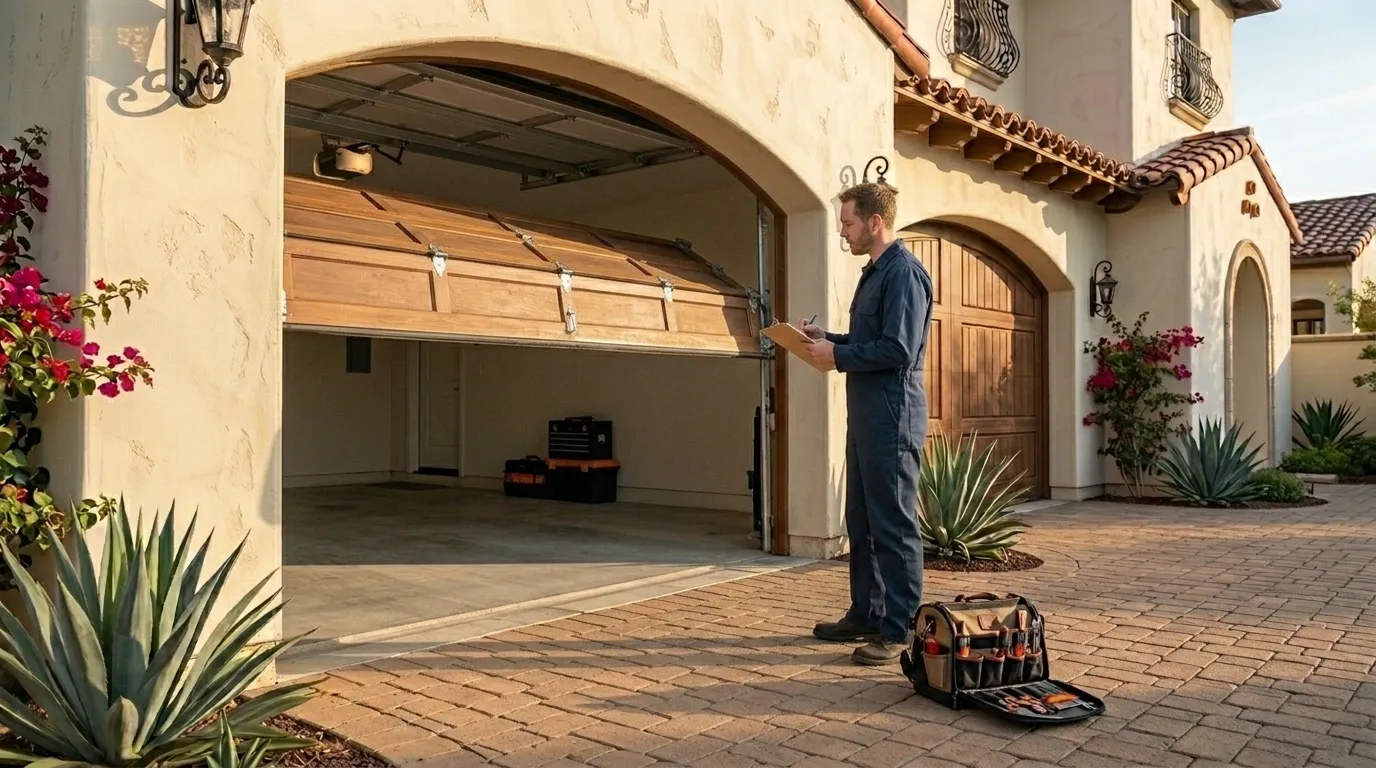
Garage Door Service
Tune-ups, lubrication, and safety checks that catch a small problem before it becomes a service call.
Learn more →Frequently Asked Questions
Does every double-wide garage door in Cleveland need a wind strut?
No. It depends on the door's age and current condition. Many wide doors from the 1960s and 70s never had one installed and have held up fine. We'd want to see the panel and track before recommending anything - a door that isn't showing stress doesn't need bracing added.
How do I know if my wide door is already flexing in wind?
Listen for new rattling at the top corners of the panel on windy days, and check whether the track has pulled away from the wall on either side. Those are the first signs on a wide door before anything actually fails.
Why does cold weather make this worse?
Cold contracts the metal fasteners and brackets holding the track in place, loosening tolerances right as wind loads on a wide panel are at their highest for the year. The combination is why winter is when marginal hardware tends to finally give.
Have a Door That Needs a Second Opinion?
Call and describe what it is doing - we will tell you what it likely is.