
Cleveland Garage Door Guide
What We Check First on a Cleveland Service Call
A Cleveland Garage Door Co tech's first-check list for homes built 1938-2004, matched to Cleveland's cold winters and the area's older torsion hardware.
- Licensed & Insured
- Same-Area Service Calls
- Upfront Pricing
Where People Go Wrong
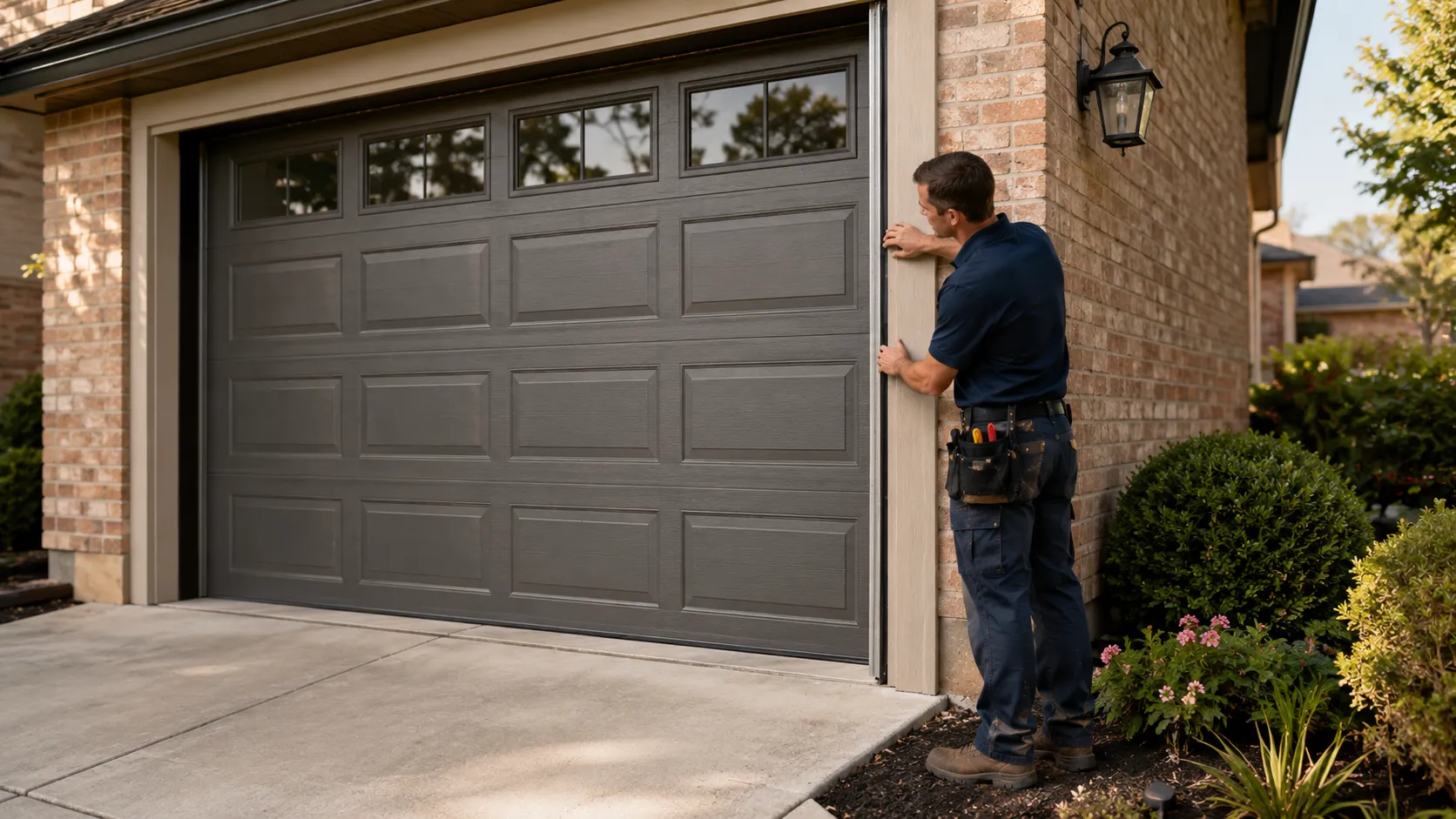
Most homeowners call us because the door stopped, then guess at why. The guess is usually wrong because it's aimed at the door, not the house. Cleveland's housing stock runs from 1938 to 2004, with the median build year sitting around 1965, and most of what we see across neighborhoods like Old Brooklyn, Brooklyn Centre, and Broadway - Slavic Village is 1960s-70s construction.
That means original jamb framing, older track spacing, and in a lot of cases a torsion spring that was sized for a lighter door than the one now hanging on it, because somebody swapped in an insulated replacement decades later. We don't start by looking at the opener. We start by looking at when the garage itself was likely built and what hardware generation that points to.
Jump straight to the motor and you miss the actual failure, which is almost always upstream of it - spring, cable, or a track that's been slowly racking out of square since the Johnson administration. A tech who checks the opener first on a house this old is going to miss the job.
The Situation
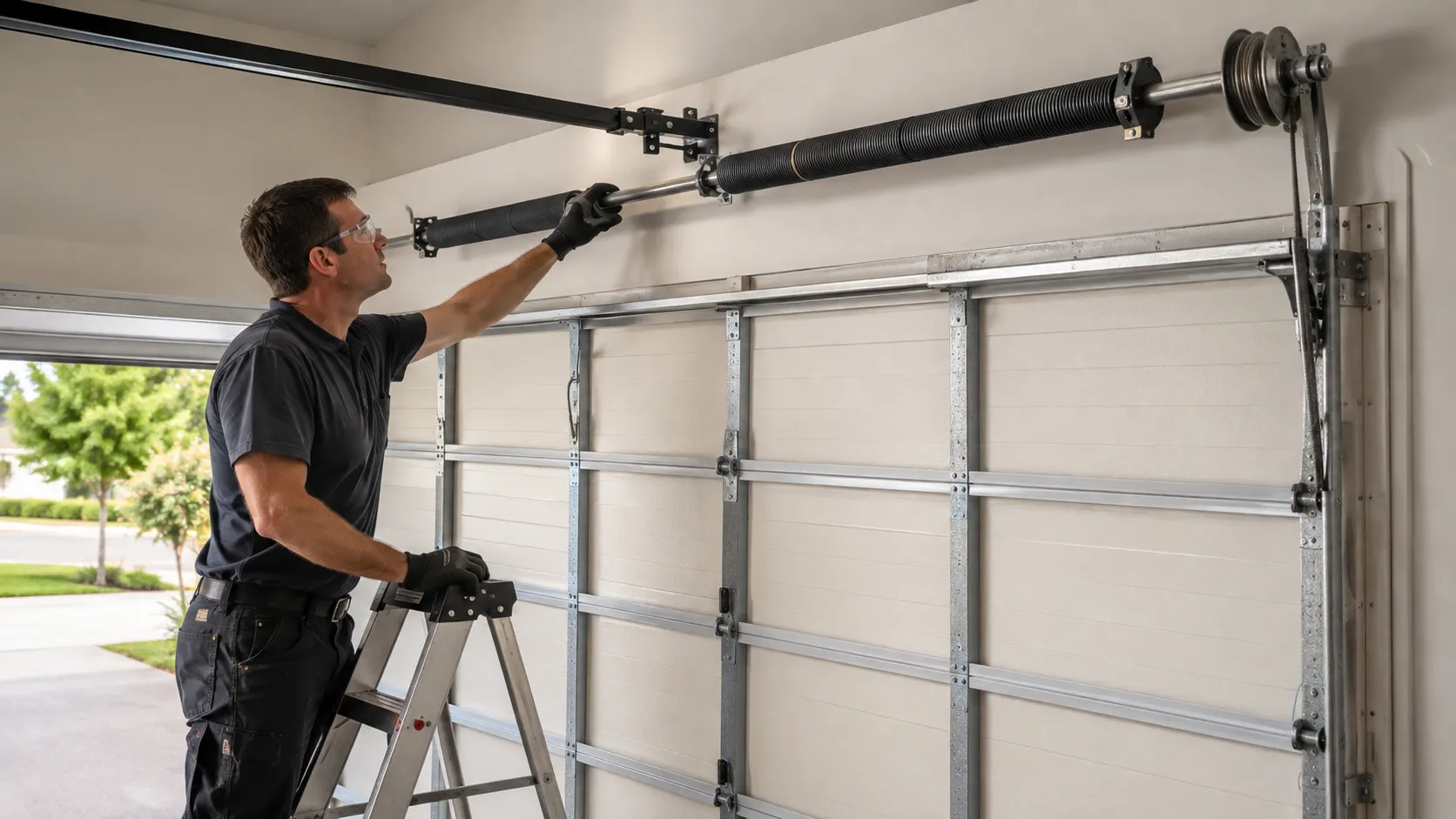
On a first visit we check four things before we touch anything electrical: spring wind and cable seating, track plumb, hinge and roller wear pattern, and whether the panel material matches the era of the door. Homes built before the 1980s in this service area often still run steel doors with minimal or no insulation, hung on hardware that was never rated for the heavier sectional replacements some owners install later without upgrading the springs to match. That mismatch is the single most common thing we find.
We also check the slab-to-door gap, because settling is common in housing this old and an eighth-inch shift at the bottom corner shows up as a door that binds only in the last foot of travel. None of this takes long, but skipping it means guessing at a repair that doesn't hold.
Doing Nothing For Now
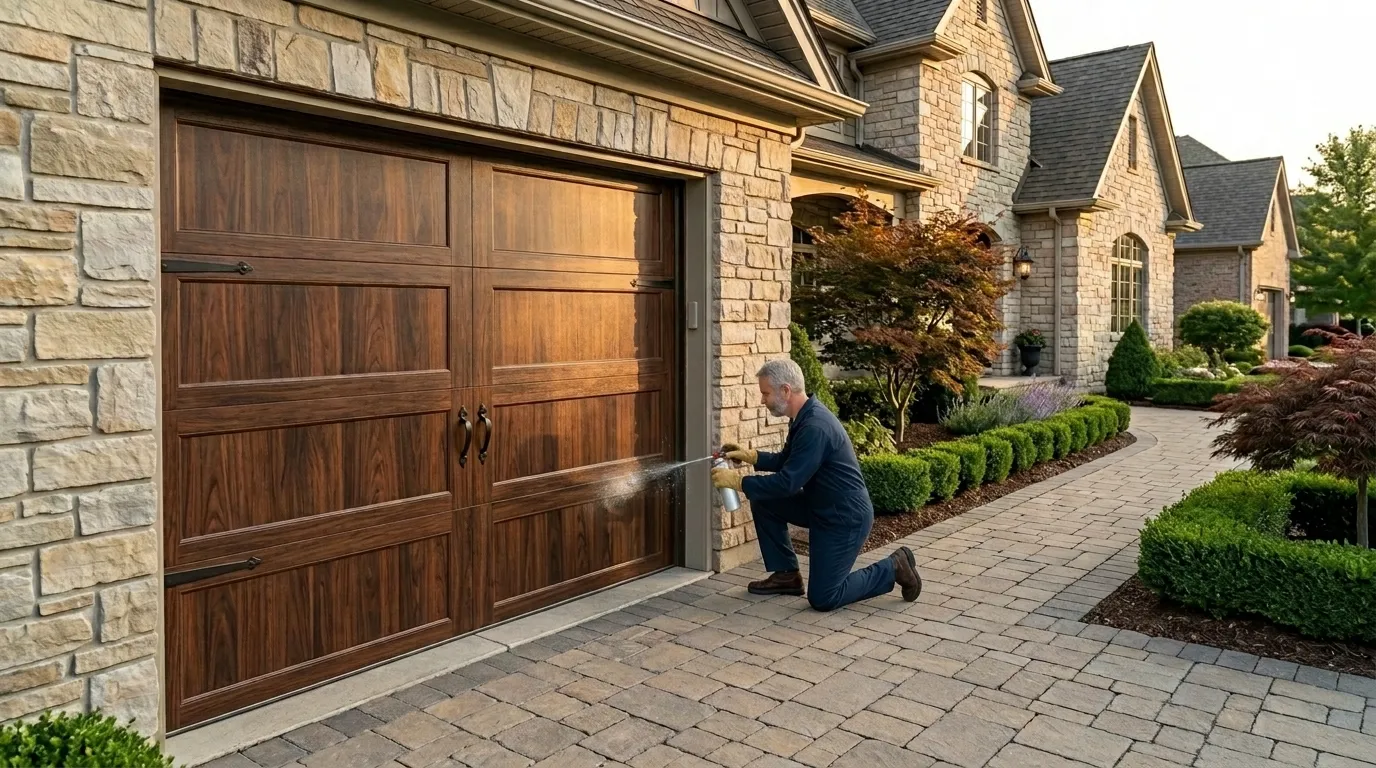
Sometimes the right answer is to wait. If a door is sluggish but not dangerous - slow to close, a little noisy, opener straining but not failing - we'll say so instead of running up a bill. We don't replace a spring that still has cycles left just because it's original.
That said, we won't tell you to wait on anything involving a frayed cable or a track that's visibly pulling from the wall bracket; those get fixed now, because they're the two failure points that turn into a dropped door instead of a slow one. Our limitation here is straightforward: we don't stock every part for every door built between 1938 and 2004, and a genuinely obscure hinge or a discontinued panel profile can mean a lead time instead of a same-day fix. We'll tell you that up front rather than promise a part we don't have on the truck.
What the Weather Here Does to It
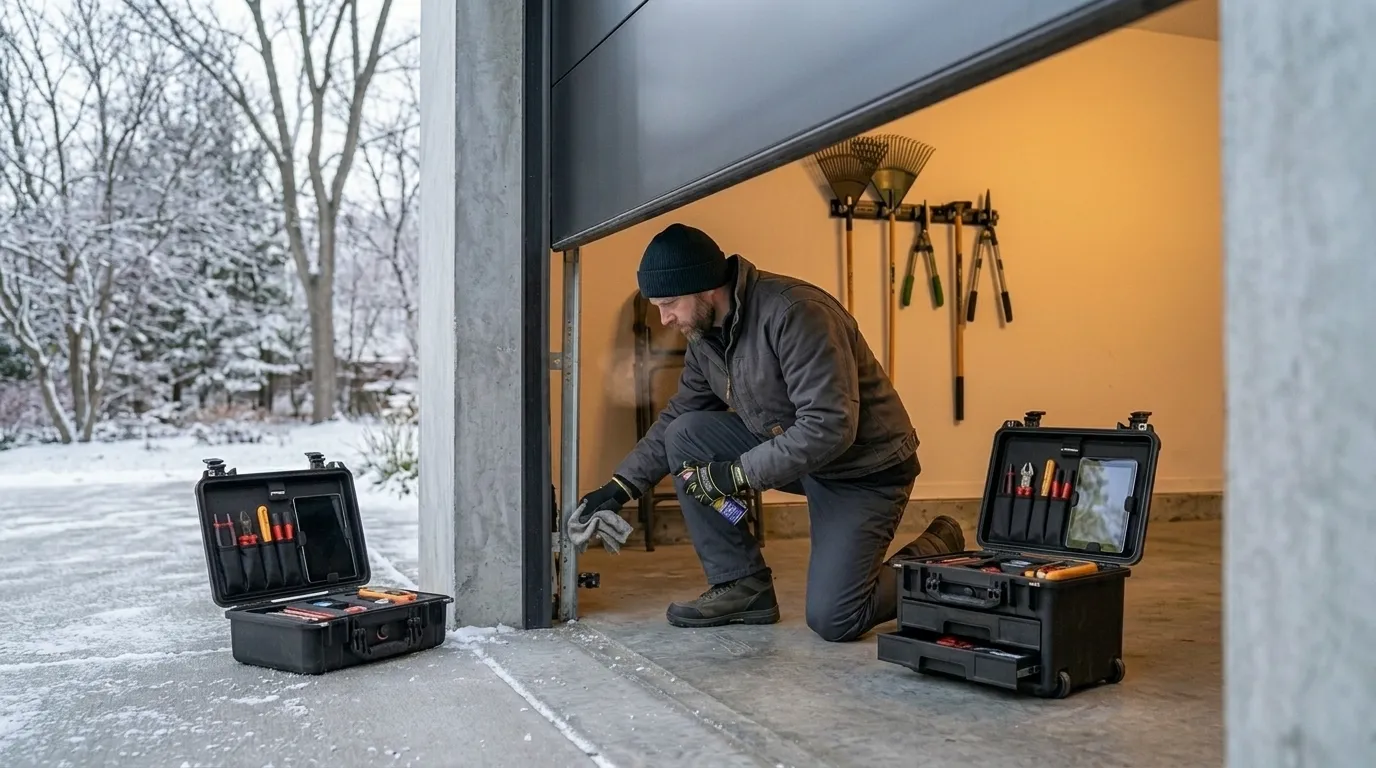
Cleveland sits in a cold climate band, and that shows up in the hardware, not just the forecast. Steel contracts in the cold, which tightens tolerances on tracks that were already close after fifty-plus years of use, and it stiffens torsion springs enough that a spring right on the edge of failure in October often lets go in January. We check spring tension differently in winter than summer for that reason - a spring that reads fine in warm weather can be a week from breaking once temperatures drop.
Weatherstripping is the other piece: on doors from the 1960s-70s stock common across this area, the original bottom seal is long gone or brittle, and cold-weather compression is what makes a door that closed fine in September suddenly bind in December. It's a small check, but on housing this old it's usually the difference between a five-minute fix and an emergency call.
How We Can Help
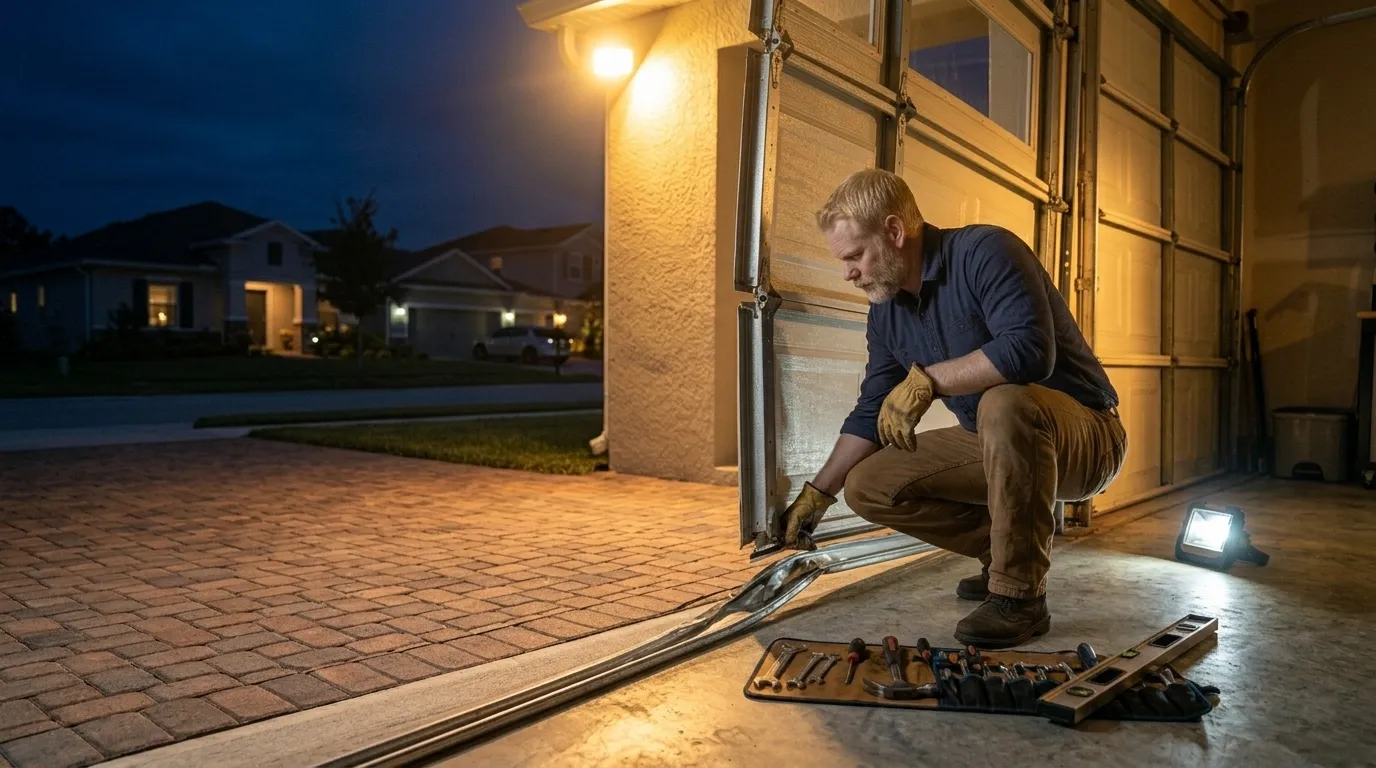
Garage Door Repair
Springs, cables, tracks, rollers, and openers fixed by a tech who explains the problem before touching anything.
Learn more →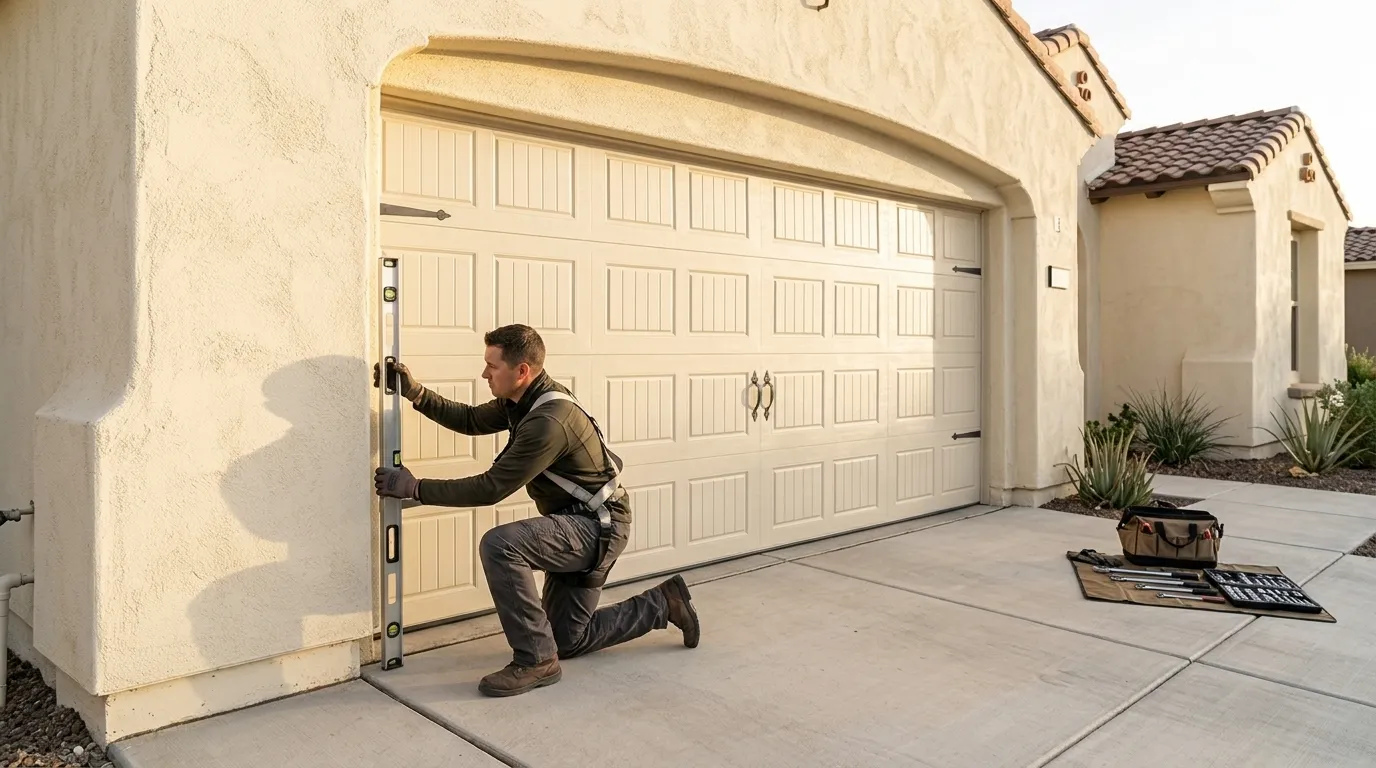
Garage Door Installation
New sectional doors sized and installed for the housing stock actually built in this area.
Learn more →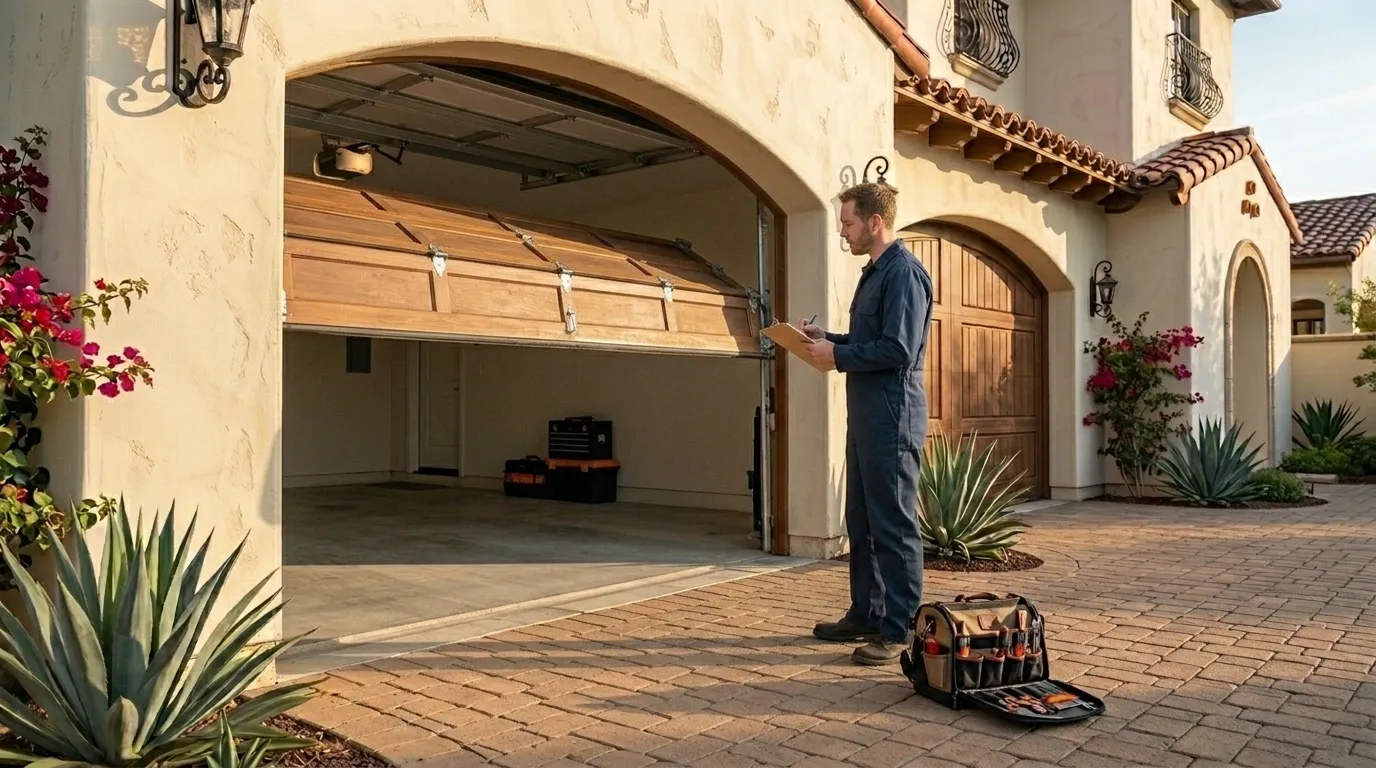
Garage Door Service
Tune-ups, lubrication, and safety checks that catch a small problem before it becomes a service call.
Learn more →Frequently Asked Questions
Why does my door work fine in summer but stick in winter?
Steel hardware contracts in cold weather, and on tracks that have been in place since the 1960s-70s, the tolerances are already tight from age. A spring or roller that's marginal in warm months often fails once temperatures drop, so what looks like a sudden problem is usually months in the making.
Do you check the opener first?
No. On a house built in this era, the failure is almost always upstream of the opener - spring, cable, or track. Checking the motor first on older hardware means missing the actual cause, so we start with the mechanical parts before anything electrical.
Can you get parts for an older door?
Usually, but not always same-day. Housing here spans 1938 to 2004, and some older hinge styles or discontinued panel profiles take longer to source. We'll tell you upfront if a part needs a lead time rather than promise something we don't have on the truck.
Have a Door That Needs a Second Opinion?
Call and describe what it is doing - we will tell you what it likely is.