
Cleveland Garage Door Guide
Why Your Safety Sensors Keep Drifting Out of Alignment
Cleveland's 1960s-70s housing stock and cold winters both push garage door safety sensors out of alignment. Here's why it happens and what to actually do about it.
- Licensed & Insured
- Same-Area Service Calls
- Upfront Pricing
Where People Go Wrong
Most homeowners treat a blinking sensor light as an electrical problem. It almost never is.
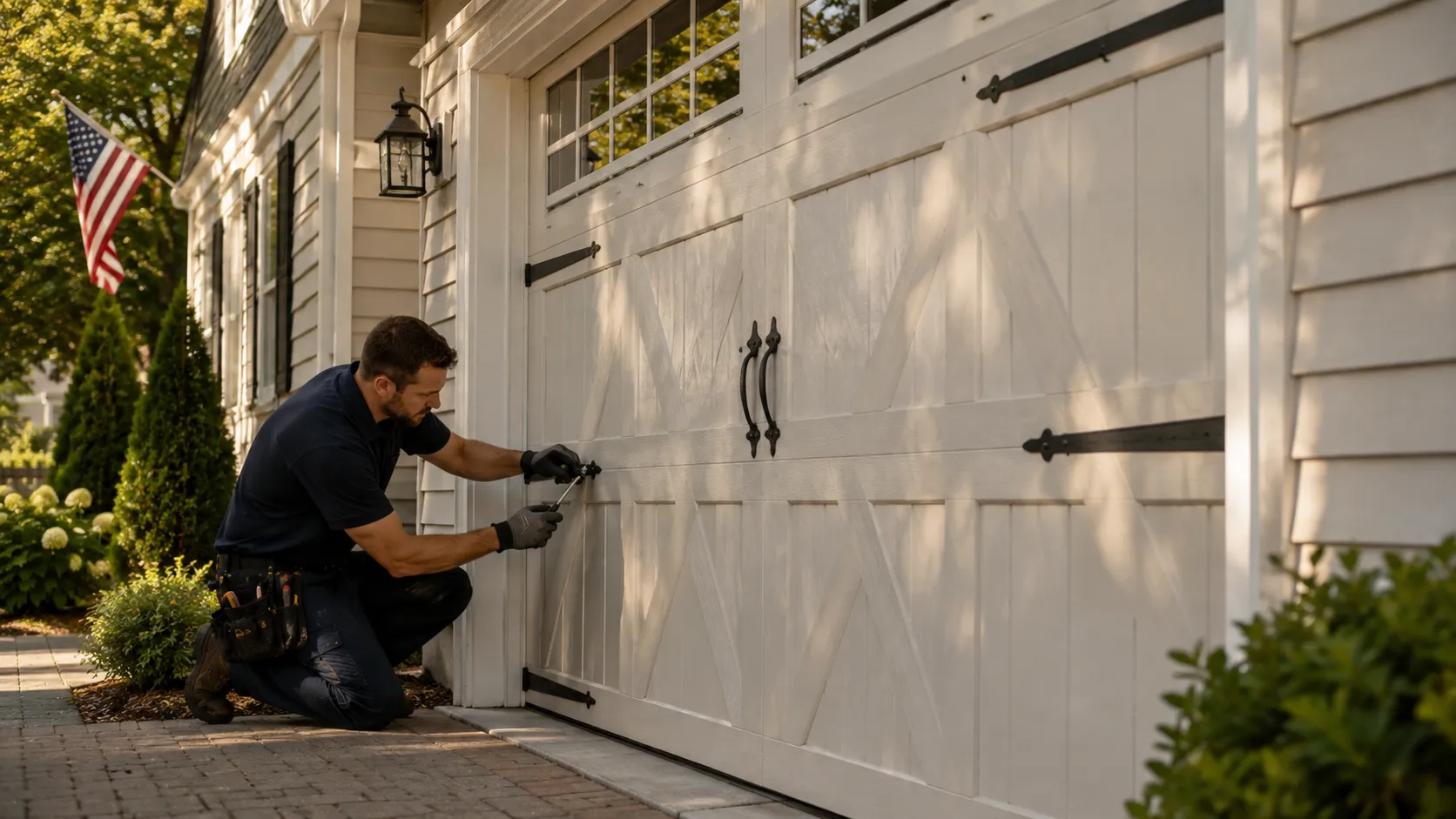
The sensors themselves - the two small eyes low on each side of the track - rarely fail outright. What fails is the aim between them, and that's a mechanical problem, not an electronic one.
Cleveland's housing stock runs from 1938 to 2004 with a median build year of 1965 - years before photo-eye safety sensors became a federal requirement in 1993. That means most of the sensor brackets on doors in this area weren't part of the original build.
They were added later, bolted onto jamb trim or track hardware that was already decades old by the time the sensor went in. A retrofit bracket on old wood doesn't hold aim the way a bracket engineered into the original frame would.
People also chase the wrong fix. They wipe the lenses, they check the wiring, they reset the opener.
All reasonable, none of it addresses a bracket that's a sixteenth of an inch off level. That's all it takes to break the beam intermittently - enough to work fine most days and fail on the one day it's humid, cold, or the door's been run a hundred times since the last nudge.
The Situation
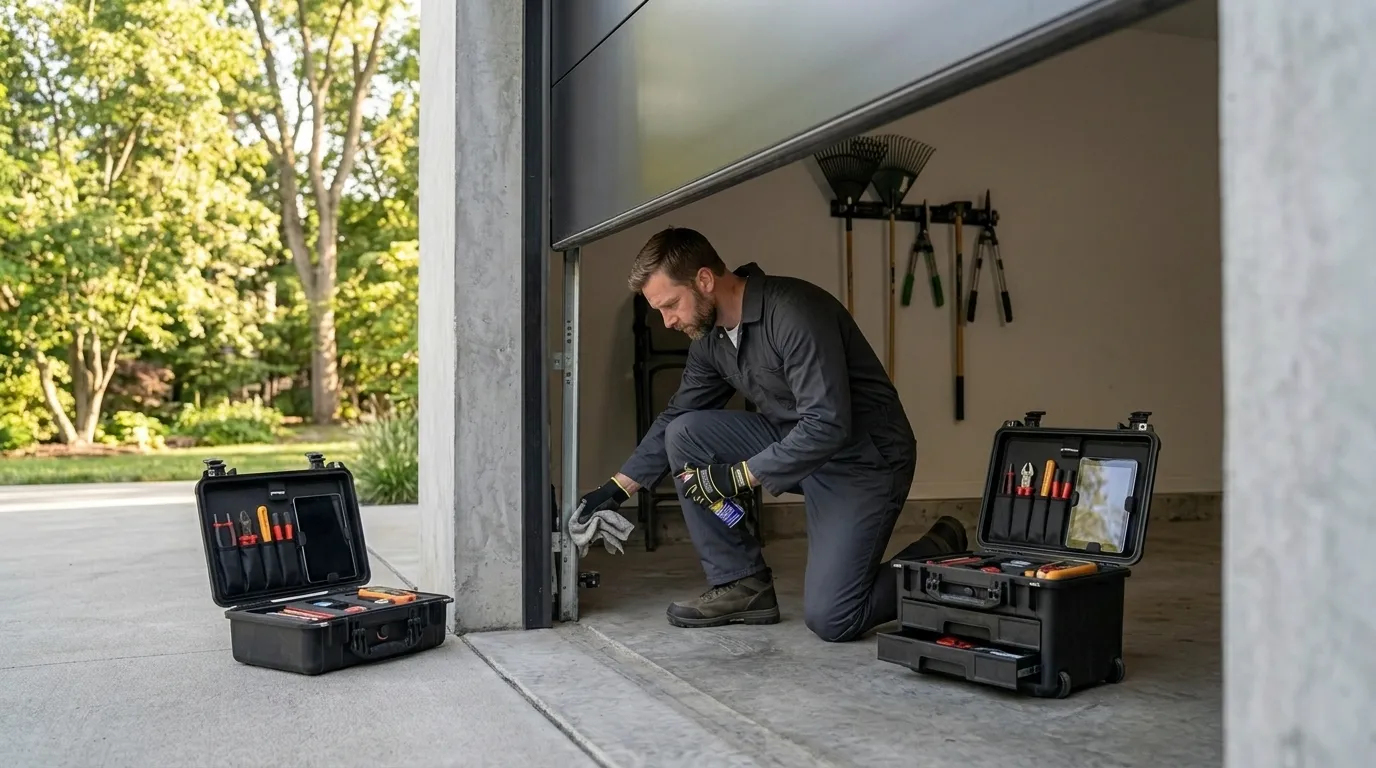
Across the 66 named neighborhoods and suburbs this area covers - Old Brooklyn, Broadway-Slavic Village, Beachwood, and the rest - the bulk of the stock dates to the 1960s and 70s. Wood trim and masonry jambs from that era have had fifty-plus years to shrink, shift, and let mounting screws work loose a turn at a time.
You don't see it happen. You just notice one day that the door reverses for no obvious reason.
The other common setup: a garage added or rebuilt later than the house itself. When the addition's foundation and the original house settle at different rates over the decades, anything spanning the two - including a sensor bracket mounted near the seam - takes on stress that shows up as slow misalignment rather than a sudden break.
Either way, the fix is realignment and a tighter mount, not a new sensor. Sensors are cheap. Diagnosing which of these two situations you actually have takes someone standing in the garage with a level.
Doing Nothing For Now
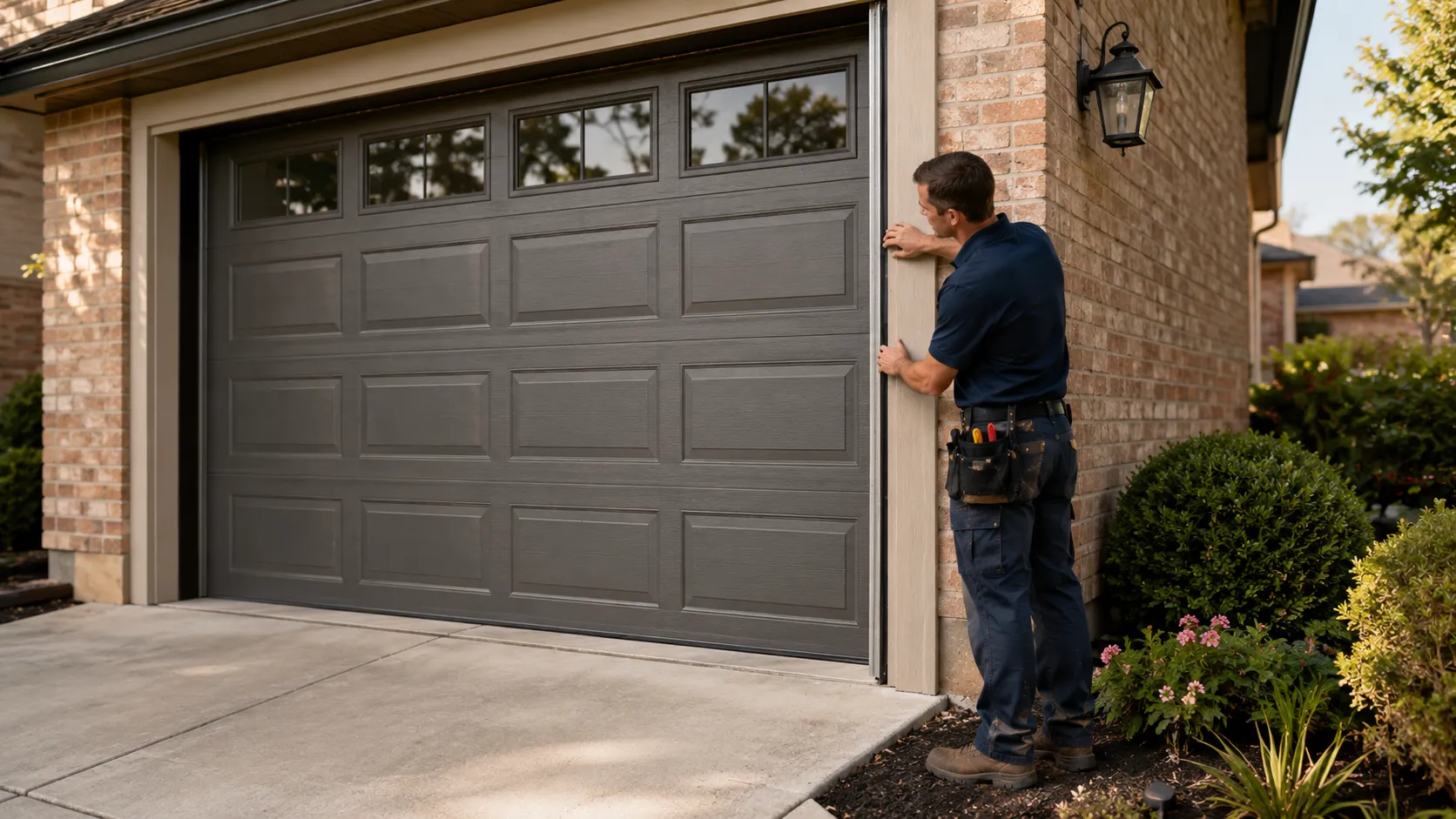
If your door still reverses reliably when something crosses the beam, you can leave it alone. A sensor that's slightly out of true but still catching the beam consistently isn't a safety failure - it's an annoyance, and annoyances are allowed to wait.
What you shouldn't do is disconnect or bypass the sensors because they're being finicky. That defeats the one part of the system built to stop the door on a kid, a pet, or a bike. If the intermittent behavior is bad enough that you're tempted to bypass, that's the sign the bracket needs attention now, not later.
Honest limitation: we can't tell you over the phone whether your issue is a five-minute realignment or a bracket that needs to be replaced because the wood behind it has rotted or the metal has bent. Older mounts in this area sometimes need new hardware, not just a new angle, and that only shows up in person.
What the Weather Here Does to It
Cleveland sits in a cold-moderate climate band, and that means the ground under a garage slab freezes and heaves every winter, then settles back every spring. That seasonal cycle is a small, steady source of movement for anything anchored near grade - including a sensor bracket mounted low on the track. A door that closed clean in October can start acting up by February, not because anything broke, but because the slab under it moved a hair.
Cold also puts moisture directly on the lenses. Condensation forms on a cold sensor eye when warm garage air meets a cold surface, and a fogged lens reads the same as a blocked beam to the opener - the door won't close, or it reverses for no visible reason. In deep cold, that condensation can freeze into a thin film that doesn't clear on its own.
None of this means the sensors are bad. It means a system aimed and mounted for August doesn't always hold through a Cleveland winter, and a seasonal check before the cold sets in catches most of it before it becomes a call.
How We Can Help
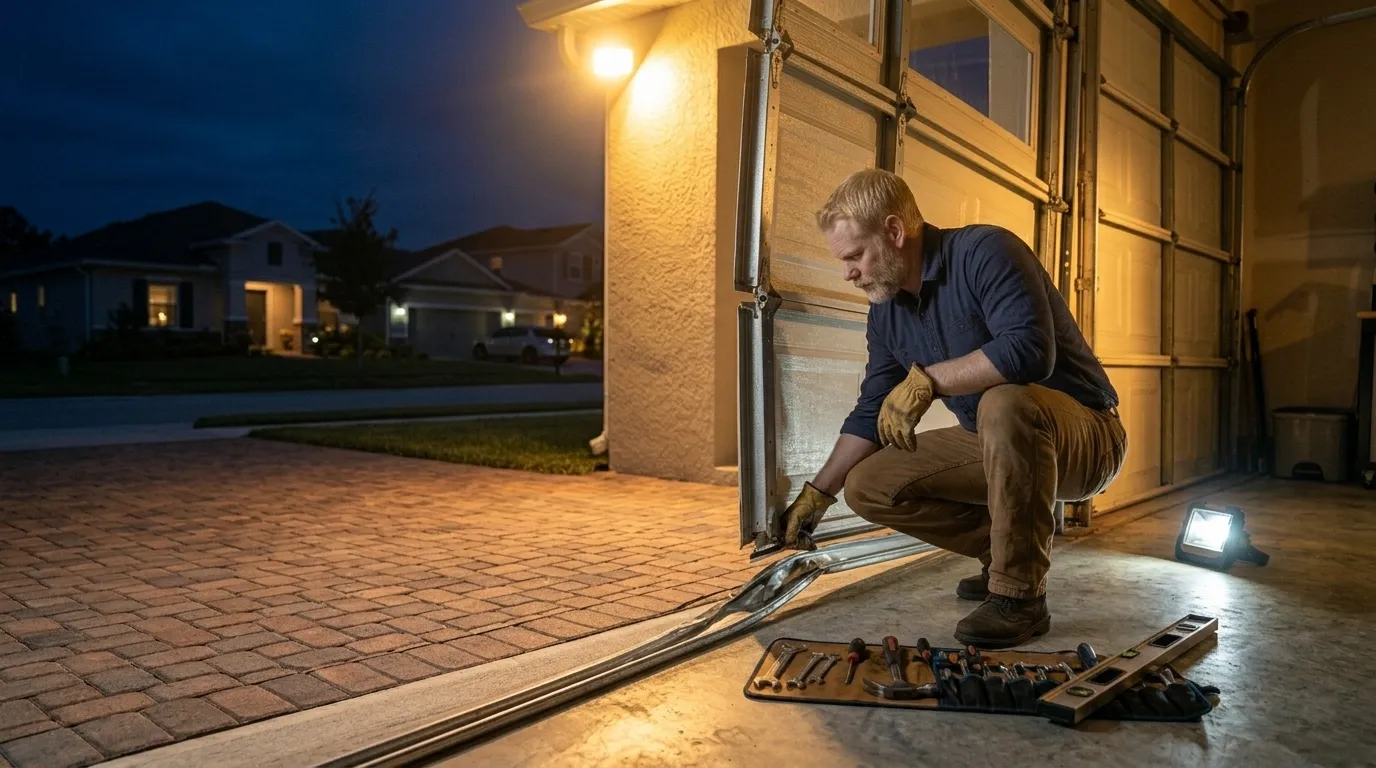
Garage Door Repair
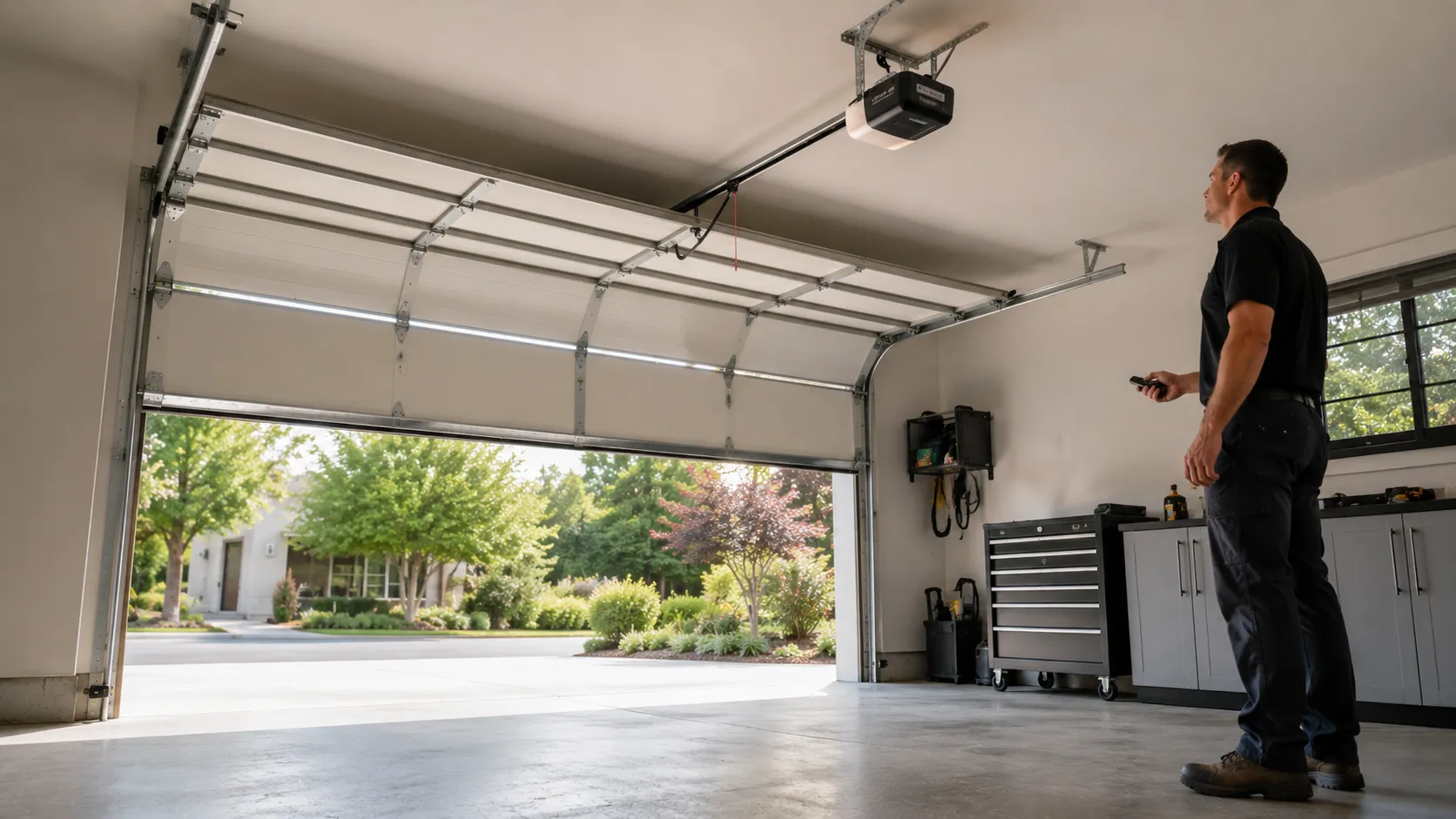
Springs, cables, tracks, rollers, and openers fixed by a tech who explains the problem before touching anything.
Learn more →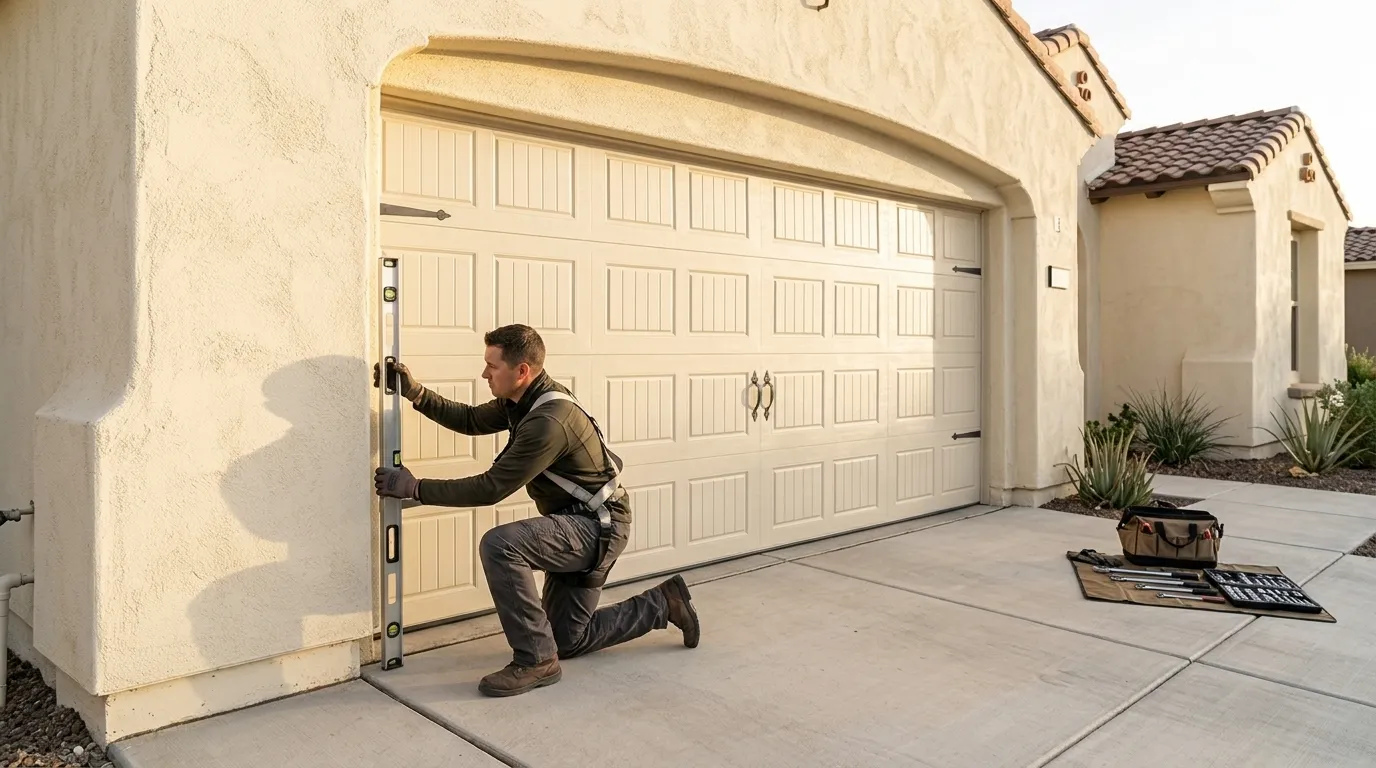
Garage Door Installation
New sectional doors sized and installed for the housing stock actually built in this area.
Learn more →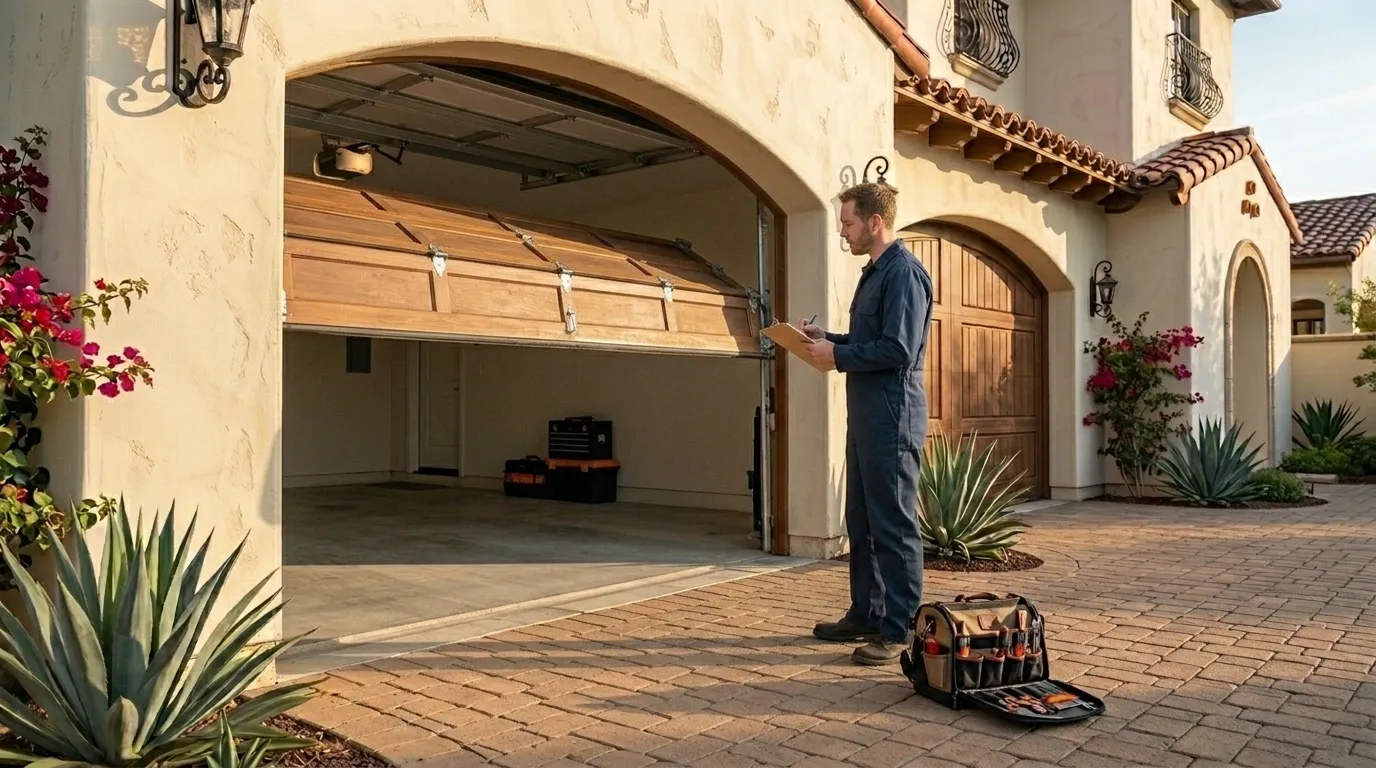
Garage Door Service
Tune-ups, lubrication, and safety checks that catch a small problem before it becomes a service call.
Learn more →Frequently Asked Questions
Why does my garage door only reverse randomly, not every time?
That pattern points to alignment, not a dead sensor. A slightly tilted bracket still catches the beam most of the time and misses it occasionally, especially as sunlight, dust, or condensation change through the day. A fully failed sensor would block the door every time, not just sometimes.
Can I realign the sensors myself?
You can try loosening the mounting screws and nudging each sensor until the indicator light goes solid, then retightening carefully. On older brackets common in this area's 1960s and 70s housing, the screws sometimes strip out the wood they're anchored in, at which point it's a hardware fix, not just an aim fix.
Does cold weather actually affect the sensors themselves?
Yes. Condensation forms on the lenses when warm garage air meets a cold sensor eye, and in Cleveland's cold-moderate climate that condensation can freeze into a film that blocks the beam. Ground heave under the slab through freeze-thaw cycles can also shift the bracket's aim over a winter.
Should I just replace the sensors instead of aligning them?
Only if the lenses are cracked, the wiring is damaged, or the bracket itself is too rotted or bent to hold an aim. In most cases here the sensors are fine and the mount or the alignment is the problem, so replacing the sensors alone doesn't fix it.
Have a Door That Needs a Second Opinion?
Call and describe what it is doing - we will tell you what it likely is.